Beyond the Boss Fight: Studio Remorkér on Building Kalusa
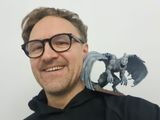

In Kalusa, clearing monsters out of the sewers will only get you so far if the alchemical laboratories keep poisoning the water. That example captures the thinking behind Kalusa: The Enchanted City, a tabletop RPG campaign where alliances, personal relationships, and the ability to persuade others can shape the future of a magical metropolis. Drawing inspiration from Dragon Age, it gives players room to choose their own priorities—and leaves the outcome in their hands.
The project comes from Prague-based Studio Remorkér, a small team balancing writing, playtesting, and publishing with full-time jobs. Developed by Martina over years of play, Kalusa is now making the journey into English, carrying the studio’s wider ambition to bring more Czech RPG creations to an international audience.
I spoke with Jay from Studio Remorkér about designing NPCs without scripting their destinies, exploring inequality in a city ruled by mages, and the challenges of publishing beyond a small domestic market. We also discussed what Czech creators see in Poland’s indie scene, why European RPG communities could benefit from closer ties, and how a single player’s suggestion about cats helped shape an entire setting.
Onwards!
Let's start with the name. "Remorkér" is Czech for a tugboat. Was that a deliberate metaphor for towing Czech games into international waters, or is there a better story behind it?
I am afraid the story is even worse than you think – I just really like the sound of that word. That it makes a nice metaphor is a bonus :D But I guess you could make a joke about Czech fascination with sea that we don’t have.
You started GMing at nine and began tinkering with the rules almost straight away. What did those early homebrews look like? Your sister Jo still seems to have opinions about your "realism phase."
Oh, the sins of youth. Doesn’t every GM go through a phase of trying to make the game more realistic by adding on more rules and more math? I remember that at one moment I felt like percentual rolls are not granular enough and I forced my players to note down their stats in permilles. Other great ideas included separating evasion, parrying and armor defense to their own rolls – I don’t think we managed to finish single combat using these “improvements”, it dragged for hours.
You joined Martina's project around 2016 as a consultant and co-writer, and later became the one pushing it abroad. How did your role change along the way, and how do you two divide the work today?
It’s been ten years, so things have changed even if only because life is moving on. I was gradually getting a bit tired by the fact that Czech RPG market is so small that publishing here is always just questions of getting it made as cheap as possible, while Martina kept working on her Kalusian campaign during covid and when she showed me what she came up with, I was amazed and it got me thinking about going bigger.
Now, our writing process in general is that Martina writes her manuscript, I am acting as her editor, and we also have a number of beta-readers that are giving us feedback. Then when it gets to the second part of the production – layout, art and such – it basically reverses, I work (or find people to work) on that and Martina then gives me feedback about how it fits her creative vision.
Your team is spread across Prague and Vietnam, with at least two cats in "quality control" and "nap management." What does a working week on Kalusa actually look like for a group that does this as a hobby?
Well, chaotically, to be honest. Of course, we all have our full-time jobs so this takes place mainly on morning or evening calls or weekend marathons. And there’s a lot of me being annoying with the deadlines and schedules. At the same time, while it is exhausting lately with the crowdfunding campaign going live, I believe it’s still fun for us – it’s a lot of work but at the end, we can see the fruit of our labor, and that feels good.
Kalusa is a cosmopolitan city of mages and a plague-ridden ghost town at the same time, basically a dungeon made of a metropolis. How would you pitch it to a GM who has never heard of it, in two sentences?
Take your group from the lowest slums to the top of the magical city, through ballroom schemes, personal alliances or perilous heists, and let them decide its future.
The project grew out of a love for Dragon Age: companions with their own arcs, and relationships and romances the player can shape. How do you get that into a tabletop book without railroading the table?
Our principle is to set up situations where the NPCs are in a tough spot with openings to interact with them and influence their decisions. And we are not writing what is supposed to happen, but rather what is the NPC like and what their goals and fears are, so the GM can decide what would be a proper reaction to whatever players come up with. That’s the advantage of tabletop, right? In Dragon Age, you can influence your companions, but only from the predetermined list of options. But here, you can actually try something we haven’t thought about!
That’s also one reason we have so many NPCs: to not make any of them “necessary”. You can always go after what looks interesting to you. If you don’t care for the family troubles of a retired arch-mage, you can go in a different direction and find some other plot hook to play with. You can actually end the campaign at completely different “victories”, so the game really doesn’t push you in a predetermined direction.
Martina has written that the RPGs she grew up with left little room for social issues, personal problems or queerness. How does Kalusa handle those themes in practice, at the table and not only in the lore?
The lore of Kalusa is set up in a way that we believe changes the situation a bit. You see, in Kalusa, discrimination, inequalities, even a lot of personal troubles tie into the theme of magic. So no-one has any problem with someone’s skin color or gender, especially as you can easily change that by a spell, but they will judge you by your magical abilities, even in a case where that’s completely beside the point.
This is obviously an allegory, but we believe that this allegorical “side-step”, let’s say, allows you to interact with the issues without necessarily bringing up the real-world traumas into the game. You can explore some dark themes while keeping it still in fiction.
Now to be clear, that’s not to say we think this is a “better way”. Calling out real problems of our times and facing them directly is very important, too. However, I think multiple approaches can be beneficial, and we have feedback from marginalized players that they are enjoying an opportunity to delve into the serious issues while at the same having their share of escapist fantasy fun as the rest of us.
After more than a decade of playtests across different rulesets, with many contributors adding ideas big and small: what is one idea from a player or playtester that fundamentally changed the campaign?
A playtester at one of the first games where the idea of “city of mages” came up – back then the game was taking place elsewhere and the idea of Kalusa was still very nebulous – well, he chipped in with “in a city of mages, there could be a lot of cats, right?” I guess you can say that was as fundamental change as it gets, because Martina loved it and it inspired her immensely – for example to buy a cat!
The second Czech book was playtested largely online during COVID, which Martina says she doesn't love. Did that period leave a mark on the design?
Hm, I don’t think so, but of course that would be question to her. From my point of view, the fun thing happened in the opposite direction, where we came up with the pandemic as an important plot-point, and during the playtests it somehow became real, same as with the jokes about the mages being hidden in their towers and communicating only though their crystal balls. Yeah and there’s also this magical machine that supposed to give answers to any question, but it spews misinformation – sometimes I think Martina actually has a crystal ball of her own!
Martina cites Avery Alder's point that D&D supports only one way of saving the day: visible heroic confrontation. Your answer is an influence tracker for factions and a framework for long-term projects. Can you walk us through how a non-violent victory plays out in Kalusa?
Kalusa has a lot of problems that are caused by terrible governance, where mages try to fix every symptom with magic while the underlaying causes fester underneath the illusions. And of course, you can earn some coin for getting rid of monsters that are getting spawned in polluted waterworks, but that will hardly solve the toxic run-off form alchemical laboratories. For that, you need to put in some work: Get some influence and finances, find people who could help and persuade them to do it, deal with those who are protecting the status quo… In Kalusa it’s rare that issues could be solved by a single boss-fight, you need to get to know people, deal with complex problems one step after another, work out compromises and even work with public perception. Actually, even with the boss fights, we always try to reflect on players’ choices and alliances, and you can usually make the fights much easier if you find help.
You went system-neutral core books plus separate booklets for 5e, a Blades in the Dark hack and Savage Worlds. That's a lot of extra work for a small team. Why this route, rather than picking one system and committing?
That’s because of specific situation here in Czechia. For a long time, the most popular ruleset here was a local one, “Dračí doupě”, split between two very different editions. I think it finally lost its dominance in the past few years, but when this project started, Dungeons and Dragons were not yet translated into Czech and the community was splintered. It did make sense back then to make it system neutral for the small Czech market.
So, this framework was already in place when we came up with idea of an English version, and sure, we could have to convert it all into DnD to capture the largest share of the market, but, to be honest – and I really don’t want to throw shade on anyone’s gaming preferences, I am playing 5e games regularly too – we are not that big of fans of Wizards of the Coast. Hence when we had the opportunity to collaborate with our friend Jan Jetmar who knows Savage Worlds as a back of his hand, and when we already had the FitD hack playtested, the decision was easier.
You enjoy everything from old-school dungeon crawls to experimental storygames. Where does Kalusa sit on that spectrum, and where did you and Martina disagree?
Interesting question, I’ll take it from the end. I would say what she enjoys the most is the part of the game where you create your own character and really enjoy playing them out, while I usually take more of “storygamey” approach where I am . So sometimes, I would skip the personal, detailed stuff to keep up the pace and drama, while Martina the opportunity to slow down.
But by collaborating, I believe we are able to keep a great balance and make it so Kalusa can be enjoyed by different types of players. She really hones the personal level of the stories and keeps her eye out on the opportunities for the small moments of characterization in a way I wouldn’t be able, and I am giving her feedback on where it might be getting too slow and losing the interest of the more action-minded reader. In the end, I really think we managed to make the campaign robust and rich enough that you can play it in a very different styles – you could take it on in Old School Essentials and enjoy all the obstacles and adventure, or you can pick up something built on Gumshoe and play it like an investigation, picking up clues and cross-examining NPCs.
What does the Czech TTRPG scene look like from the inside? Which local creators or modules would you most like international players to discover?
It’s small and it’s rather inward-looking, I am afraid. Not that there are no talented people, but they don’t see publishing their work as a viable option, domestically or abroad. But if there’s one thing I would like you to check out, it’s “The Few”, a game about fighter pilots in the Battle of Britain. It’s older, but got an English translation and it’s definitely worth it, it’s at the same time an interesting game about dog-fighting and a great emotional experience about war.
Why not have one of the big international publishers do the translation, and instead take the risk yourselves?
From one side, it’s hard to get the international publishers interested in local art, even if we talk about those respected, “elite” forms like literature. Czechia, like most small countries, has a whole government department trying to promote our culture and, well, how much of Czech art do you know? I guess we have at least the videogames, now.
From the other side, it’s our work that we worked on so hard that we feel quite strongly about it, so we would be afraid of loosing our creative control in a case we would be just a small unknown “contractor” for a big publishing company.
Translation is more than language. What had to change in Kalusa for readers outside Czechia, and what did you decide to keep untranslatable on purpose?
There were many changes in names and such, so they would work in English. Getting rid of “ř” sound, for example. Even the name of the city changed, actually – in Czech it was Kalus, but then someone asked us why would we name our setting “callus” and that wasn’t our favorite reaction. We tried hard to make translation as good as possible (bad translations are my pet peeve) but of course, some of the jokes and puns just won’t carry over. However we tried to replace any that we had to leave out by a new one, so don’t worry, you won’t be spared of our silly sense of humor!
What does success look like for this campaign in concrete terms? Is it the full-color illustrations, a sustainable studio, or something else?
Right now, just getting the book printed – the opportunity to hold it as something that we created and published – would be great. Of course, to get enough support to be able to continue with this would be amazing. While we did not realize how hard it will be to launch a crowdfunding campaign, it was at the same time a great learning experience and I would love to use that to do more stuff for our scene and our hobby.
You mentioned smaller OSR modules coming soon. What are they, and how do they fit next to a story-heavy campaign like Kalusa?
They are, in a lot of ways, a complete opposite – where Kalusa is a huge book that is meant to last you for a whole campaign, what we are also publishing in a next few days are adventuring locations that fit on just single sheet of paper, so you can keep them in your GM binder and use them when you need to fill a session or two and don’t have enough prep. I guess you can say that this is sort of mid-workout stretching for me creatively – where Kalusa is this giant of a project, this is going in a different direction. Also it shows that this is not a one-man show, actually every project has a different main writer and I am just trying to get them over the finish line.
But while the form is very different, some things are the same: The main goal is still to give GM as much actionable prep as possible so he can just let the players explore, interact and solve it their way. I guess a moto on our hypothetical coat of arms would be “player agency” – I just need to translate it to Latin.
Your dream is to publish other Czech modules that are "shackled" by the language. What makes a local module worth exporting, in your view?
I believe talent can be found anywhere, and, what’s more, that diversity is great for creative endeavors. I always loved exploring and finding new inspiration for my games, so I am always on a lookout for RPG stuff that’s from some other culture, be it about country or just a different tradition. And by now, we all know the stories Americans tell, but are those only stories worth telling?
You said you were inspired by the Polish indie scene. What exactly did you see from Prague? What are we doing right, and what should we steal from the Czechs?
The most important thing I believe you are doing right is quite simple – you are writing and publishing, and publishing in English, too. There are jams, there are crowdfunding projects, you have great artists known around the world. I especially appreciate the games that really take advantage of their polish cultural background and bring something new for me to the table. And about stealing from us? Well – I hope there will be more to share in the future. Right now, you might steal our diacritics, it would make it much easier for me to read your books and you will save up on the ink :D
You argue that European roleplayers would all profit from getting closer together. If you had a budget and a free weekend, what would you actually build: a con, a shared distribution channel, a translation fund?
European con would definitely be something I would love to see, but realistically, I think that would require more than just money, that needs some networking first – to get European creators in touch so a healthy community can grow around that. So I would start the work towards a con by setting up a creative platform to share and communicate on.
Last one :) The tagline says "come for the magic, stay because a cat stole your map." Is there a true story behind that?
Haha, well not directly, but we had this fun sort of “spin-off” adventure where the players take the role of the magical cats that need to help their people pass an important exam at the Kalusa university. We played it multiple times as a con game and there were often some shenanigans with getting people lost in the labyrinthine city.