Why the First 48 Hours Matter: Bob World builder on Kickstarter and Trust

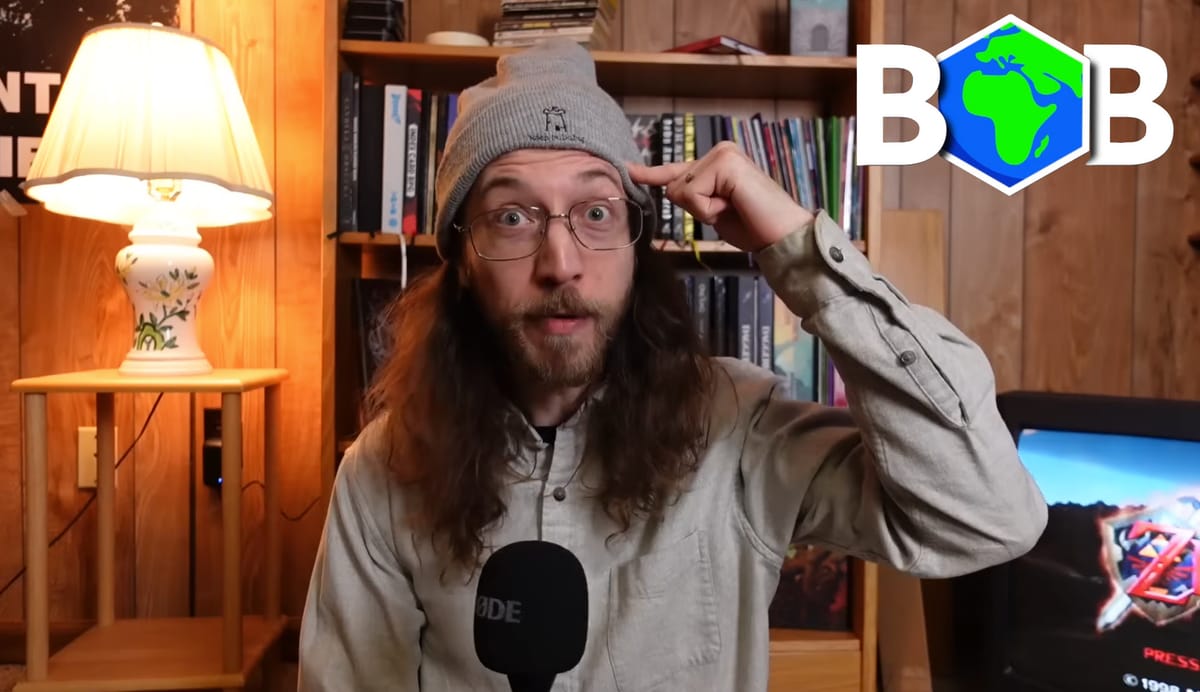
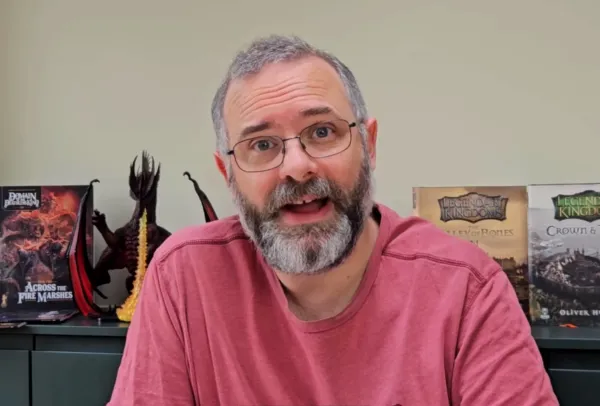
Bob World Builder has spent years breaking down tabletop design on YouTube with a rare mix of clarity, pragmatism, and healthy skepticism toward hype—whether it’s about mechanics, Kickstarter myths, or the role of AI in creative work. But alongside the videos, Bob has quietly been building a growing catalogue of his own RPG products, learning firsthand what it really means to turn ideas into books people are willing to pay for.
In this conversation, we talk about where TTRPG products actually come from (mechanics, settings, or very specific GM problems) and why there’s no such thing as an “ideal” product for the market. Bob shares hard-earned lessons about marketing, playtesting, pricing ideas, handling contradictory feedback, and why momentum in the first 48 hours of a Kickstarter can matter more than almost anything else. We also dig into community-building over the long term, the trade-offs between simplicity and depth, and what most first-time creators still get wrong when they launch their first campaign.
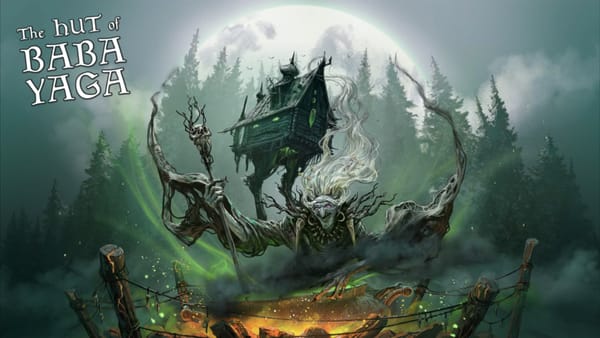
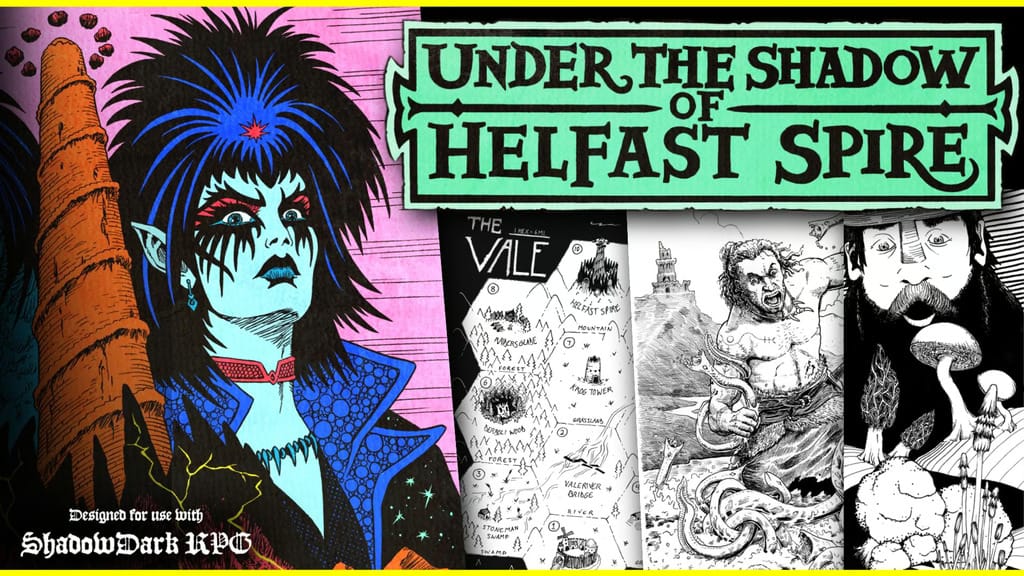
Along the way, Bob also references his upcoming crowdfunding campaign, Helfast Spire, built for Shadowdark. The campaign launches on February 10, and if you’re reading this interview as a creator (or as a GM looking for a dark, focused dungeon experience) it’s well worth keeping an eye on!
If you’re interested in how RPG products are really made, sold, tested, and sustained over time (without pretending there’s a magic formula) this interview is for you.
Onwards!
When you start working on a new TTRPG product, what usually comes first: mechanics, setting, or a specific GM problem you want to solve?
I've definitely made products from all three sources of inspiration, and I don't think one in particular takes the cake for me. I've made a weapon supplement that was all about trying to improve, or at least customize, the mechanics of D&D weapons. My upcoming book is entirely inspired by a setting and dungeon that I wanted to create. And I have another old supplement where I made a tiny subsystem for lockpicking, simply because I wanted it to feel more like lockpicking in Elder Scrolls games. That might seem mechanical, but it was absolutely a specific GM problem I wanted to solve for myself!
If someone asked you today how to design the ideal TTRPG product for the current market, where would you tell them to start?
I don't think there's such a thing as an ideal TTRPG product for the current market. It's only ever going to be the project that keeps you inspired and fulfilled from start to finish, and then hopefully inspires others in turn.
How important is clarity of purpose (knowing exactly who the product is for) compared to originality or innovation?
This kind of clarity is paramount! Again, it should be a product for you, the creator. Then like-minded people will gather as you promote the work. Frankly, I don't think there's such a thing as true innovation in this space anymore. Most creators are working from the same source material, so they independently create the same things over and over with slight variations. So yes, it's way more about knowing why you're making something than worrying whether or not someone else might have done it before, because they have.
Do you believe modern TTRPG products should aim to save the GM time above all else, or is there still room for complexity and experimentation?
This is pretty similar to the previous question! Different GMs want different things. Some want products that require zero prep to run. Others know they realistically won't play again for a few weeks and just want some interesting RPG material to read in the meantime. Most are somewhere in between!
What trade-offs do creators most often underestimate when trying to make a product that is both creative and commercially viable?
I don't think it's a trade-off per se, but a lot seem to underestimate the importance of marketing. As in, they've already decided they want the thing to make some money, but they made no plan for how to get people to recognize the greatness of what they've created. I think it's a pretty common problem because people treat writing a product like writing prep for their home game. Products have to be more community-driven from the beginning to know whether or not an idea actually has legs. And again, this is just if you're hoping to earn some money from it.
How do you decide that an idea is strong enough to become a paid product rather than a free resource or a YouTube video?
This doesn't really have anything to do with the “strength” of an idea so much as the kind of idea. For example, the product I'm working on now started as me wanting to expand the setting, and specifically a dungeon location, from a previous product. I knew that would take weeks of work, and maybe more importantly, that no one would watch a video where I just talk about some lore I made up recently. So this idea had to become a written project if it was going to be anything. Then, once it got past a few pages, it was already feeling more like a product than a freebie. On the other hand, when I recently had some thoughts about how I use my pre-game jitters to boost my confidence when running RPGs, I never even considered how that idea could become a “product” other than a video discussion.
What does your playtesting process look like today - solo testing, a trusted table, or involving your community early on?
Playtesting for me is mostly solo, and some group testing when I can easily drop the draft into my home campaign. The real key is studying the source material to know when something you're creating is too weak or too powerful for that game, and using spreadsheets for stats when messing with math. I also send drafts to creator friends to get their opinions on whether or not anything seems off. I do some playtesting with my Patreon as well, but since that's a semi-public space, not too much. Like any kind of editing, there will be things that slip through the cracks, but nothing beats getting someone besides the writer to sit down with the material.
Which of your products taught you the most about the realities of the TTRPG market, and why?
From my products, Delve has been the most informative! It was my largest-scale project by a long shot, and even with an experienced pair of publishers working with me, we ran into a number of surprises along the way. But my main takeaway as a writer was reinforcing something I learned from a video I made a few years ago: a lot of people want third-party RPG materials to look as official as possible. I had to learn this lesson a few times because it's just not the way I think! I like it when creators follow their own style and can twist elements of a game, both aesthetic and mechanical, in new directions. But with my upcoming projects, I'm being much more diligent about adhering to the standards set by the first-party material.
Do you think it’s easier or harder today to release new 5E-compatible products, given how crowded the space has become?
If there's a problem selling 5e products today versus five years ago, it has a lot more to do with the fracturing of interest caused by D&D's Open Gaming License scandal, and now the split between 2014 and 2024 D&D 5e. The 5e market is definitely saturated and highly competitive, but that’s been the case since at least 2021.
Looking back, what mattered most in building your community: consistency, personality, or practical usefulness?
Difficult to pick one out of those three… and I think I'd have to replace practical usefulness with the word value. Because the most successful community builders, at least in the video creator space, are all comedians who love RPGs, not GMs with outstanding advice every week. Without some kind of value, viewers won’t come back, but a lot of that also stems from the consistency to keep creating week after week. I think in seven years of making weekly videos, I've only missed three weeks, and each break was planned well in advance. So funny enough, personality may be the least important part. I’d say it's really a matter of how your work ethic and the value of your content come together that will get a viewer to enjoy your personality, not the other way around.
How did your relationship with your audience change once you moved from content creation into selling your own products?
I don't think it changed much at all! For the majority of my channel's history, I had sponsored segments in videos promoting other people's products, so if anything, I think people were excited to see me finally making my own products. I wish I had done it sooner!
Do you think TTRPG communities attach more strongly to creators, tools, or worlds - and has that changed over time?
Individually, I think TTRPG players are much more tied to worlds than anything else. That's their home game, where they're spending a couple hours every week. I think communities are much more tied to tools, and specifically the core rulebooks of their preferred games. Those are the books they will fight to defend in comment sections online!
How do you deal with conflicting feedback, when one part of your audience wants simplicity and another wants depth?
When I got a lot of people in the comments of a monster stat block video telling me I was objectively wrong for trying to simplify the format, it was pretty easy to pick out the few good points of feedback from that side and then ignore the rest. Online feedback is rarely constructive. This goes back to making what YOU want to create, not worrying too much about what a particular group wants. Sometimes I want to make simple stat blocks, and other times I want to make a complicated system for lockpicking!
If you were starting from zero today, what’s one thing you would do differently when building a community?
I would put way more effort into each of my PDF products from the start, finding experienced publishers to help me make them as good as they can be, so I could have been building a more robust library of products that would still sell well today. Meanwhile, I'd be building an email list of interested customers! If I could only choose one though, I think I’d choose the high quality product library, but unless you have your own YouTube channel, you should choose the email list.
From your experience, what actually sells a Kickstarter campaign: the idea itself, trust in the creator, or momentum in the first 48 hours?
This answer is mostly from my experience watching hundreds of other Kickstarters unfold, having only sort of run one myself thus far. But it's got to be that 48-hour momentum. Trust in the creator and a strong idea will be very important for making those first 48 hours awesome, but if you don't have that, it's not going to be a standout Kickstarter campaign. It might still be a great book. It just won't be a campaign that blows anyone away.
Which communication channels have proven most effective for your campaigns (YouTube, email lists, social media, or word of mouth etc.)?
YouTube for me, of course, but email lists are the number one answer according to every non-YouTuber I've asked this question. That's why I'm trying to build up my own list today, now that it’s getting harder and harder to reach my own audience on YouTube.
How early before launch do you start actively preparing your audience for a Kickstarter campaign?
So far, from two campaigns, about two months. But it's still tricky to say what is actively preparing versus just teasing some material here and there. Overall, I think longer is better, because the more followers your campaign has, the more likely it is going to have a strong first 48, like we said earlier. There could be an issue of creating too much hype too soon, and then people losing interest by the time launch finally happens, but worrying about generating “too much hype” is like being the guy who worries if they start lifting, they’ll gain too much muscle.
What are the most common mistakes you see first-time TTRPG creators make when launching on Kickstarter?
I think I already said this, but it's a lack of marketing. Either they didn't budget for it at all, or they're reaching out to creators only a week or so before their launch, or they just thought that the Kickstarter algorithm would advertise it for them. There are a lot of ways to do it wrong, but getting it right is pretty simple. Whether you use Facebook ads, your own email list, teaming up with some YouTubers, or most likely some combination, you just have to be getting the word out there.
Do you still see Kickstarter as a place to experiment with ideas, or mostly as a platform for already validated products?
I personally see Kickstarter as a place for ideas that I've put a lot of thought into, and then feel very confident asking members of my audience to put their money into. If I want to experiment with something, I'm releasing a free PDF or just making a video about an idea. I don't really think people should use Kickstarter as an experiment, because that kind of betrays the trust inherent to crowdfunding as a way of selling your product. Sell your experiments on DriveThruRPG with a full preview.
What is one practical and responsible way you think TTRPG creators can use AI today without undermining their own creativity or trust with their audience?
Impossible question! Using AI for any creative task undermines the user’s creativity by definition. It’s a machine you use when you don’t want to use your own brain. Ignoring creativity, but perhaps practical and responsible: I occasionally use AI to add punctuation and capitalization to chunks of video scripts that I wrote using voice-to-text, so I can instantly get good captions for a video. That's the sort of accessibility application that can get thrown out with the bathwater. Overall, I think 99% of RPG problems that could be solved with AI can be better solved by rolling on random tables, because at least a human curated the possible random responses, and you get to roll dice!
This interview is presented in partnership with Strigovia.
Strigovia is a dark, Slavic-inspired tabletop RPG where what we call “magic” is not a gift, but a debt owed to the ancient Forest — a power that listens, remembers, and always collects. There are no carefree spells or heroic fireballs here, only whispered rituals, blood-bound bargains, and slow transformations waiting for those who ask for too much.
This is low-fantasy horror focused on survival, painful choices, and stories that linger long after the dice stop rolling.