Why Long-Form Still Matters: Mike Shea on Writing, RPGs, and Resisting the Algorithm

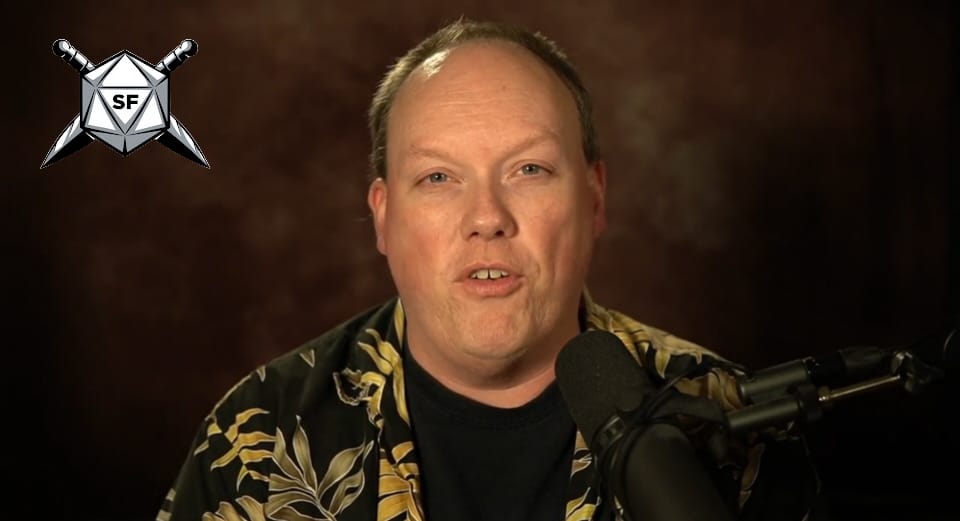
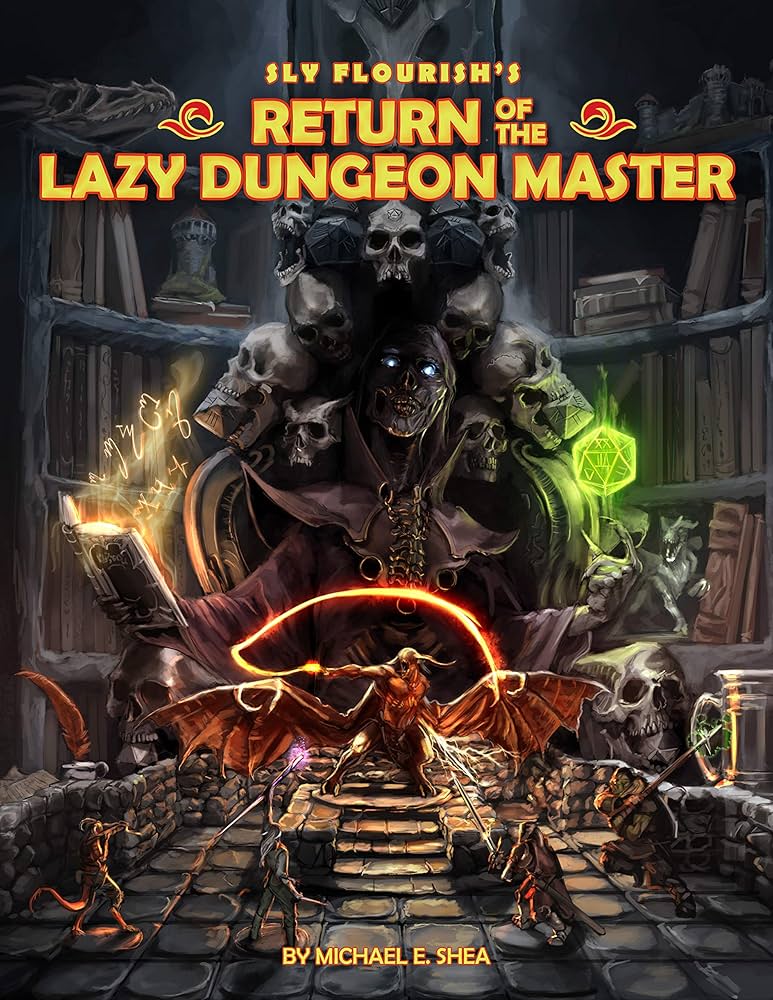
For more than a quarter of a century, Mike Shea has been doing one thing with remarkable consistency: helping Game Masters run better games. As the creator of Sly Flourish, author of Return of the Lazy Dungeon Master, blogger, YouTuber, and publisher, Shea has become one of the most recognizable (and, more importantly, most trusted) voices in the TTRPG space. In an era dominated by algorithms, short-form content, and constant pressure to chase growth, he has quietly chosen a different path: long-term thinking, deliberate writing, and a deep commitment to genuinely serving his community.
In this interview, we talk about longevity on the internet, why long-form writing still matters, and how freely sharing knowledge can coexist with a sustainable business. Mike reflects on Kickstarter as a relationship rather than a hype machine, explains why he avoids growth hacks and platform dependency, and offers a grounded perspective on the role of big corporations, shifting technologies, and AI in the RPG ecosystem. This is a conversation not about quick wins, but about building something resilient, meaningful, and worth returning to—year after year, session after session.
You’ve been blogging continuously for over 26 years. How has your motivation for writing changed over time and what kept you from ever stopping?
Yeah, I love writing and I love writing short articles to help people navigate specific topics. I've written, I think, more than a thousand such articles so it's pretty easy for me to do at that point.
A couple of years ago I realized that I get about 5x more readers to my newsletter than I do as a blog post so I started to focus them down even further – aiming for a target of 500 words instead of a thousand or two thousand words. I don't think people have a lot of time for long articles so I try to distill it down. I'll still write longer pieces, though, when I think they're worth the words. Or I'll save the topic for a book instead.
I just love writing and I hope I don't stop until I fall over.
In a world dominated by social media, short-form content, and algorithms, why do you think long-form blogging still matters?
I think short-form media just doesn't get points across as well as a blog post (which I hardly consider long-form). I much prefer reading meaty articles myself and I've largely let go of short-form social media platforms. Even though many have moved to Bluesky, I don't really go there very often. I never got into Instagram or Tiktok.
It's hard to say what "matters" or not, but it's the sort of work I plan to keep putting out and hopefully folks read it, find value in it, and have fun with it.
Have you ever felt that you were giving too much knowledge away for free? How do you draw the line today between open sharing and sustaining a business?
No. I love giving stuff away. Michelle and I (my wife and business partner) talk about what we should give away and what we should continue to hold the rights to. There's no sign to me that giving things away hurt our business. I don't regret any of the stuff I have given away and I have plans to continue to give more away as I go. For me, I try to put stuff out in open licenses that I think can really benefit other publishers or that can be transformed into new mediums that I can't get to. I don't want to get in the way. I don't want my rights to certain works get in the way of the future evolution of our hobby.
So yeah, I love giving things away and I want to do more of it.
How has writing primarily for Dungeon Masters shaped the way you run games at your own table?
I think I'm always in a cycle of learning from my own games, capturing those experiences, sharing them as tips or articles or pieces of a book, thinking about them, trying them at my table, and going through the cycle again. My game isn't too analytical. We're just a bunch of folks around a table having a good time like everyone else. But I'm also constantly learning and refining and sometimes it feels like every time I learn more I realize how much less I thought I knew. Which, I guess is a good sign.
Your audience is remarkably loyal and mature. What early decisions do you think had the biggest impact on shaping that community?
Honestly, none of that was conscious. I actually have a good deal of folks from overseas because I happen to record my stream on Sunday mornings at 9am my time so only folks in Europe are actually awake.
Otherwise, the people who find value in my work selected themselves. I didn't set out to grab any particular audience other than GMs. Since the OGL I pivoted from a focus on D&D and 5e to a wider range of RPGs and that also caused my audience to self-select.
Did you consciously avoid growth hacks and aggressive marketing - or was that simply a reflection of your personality and values?
Yeah, one element to all of these questions is that, while our business is doing fine, it isn't critical to our lives. So that gives us some freedom to choose what we want to do, including not chasing aggressive marketing, youtube clickbait, desperately chasing TikTok's algorithms or anything like that. Growth isn't our goal, really. Our goal is to help GMs run great games and everything we do aims in that direction.
Technological independence has always been an interest to me (although I fell hard for Apple and now regret it), and part of that is not being totally bound to huge trillion dollar companies and their whims. Our dependence on YouTube bothers us. But we're able to own a lot of our own platforms and that makes me happy: blog, RSS, email, podcasting, our own store, etc.
From your perspective, what are the most common mistakes creators make that slowly damage or fracture their communities, even when the product is good?
I don't know that I have any fantastic advice on this. Every creator's journey is a different from one another and what someone like me might think is a mistake ends up being really valuable for others.
I'd say trying to chase the new shiny thing continually isn't great. Being consistent with your approach and drive hopefully brings the right people to you and helps them stay around.
But I think keeping an eye out for how the industry changes is also probably important and holding that side by side with your drive as a creator – that feels like a good idea.
Your Kickstarter campaigns feel stable and predictable in the best possible way. How do you personally think about Kickstarter - as a sales platform, a marketing tool, or a relationship with your audience?
In a later question you mention "How to Make it in the RPG Industry" which is really my best advice for how to think about Kickstarter and its related platforms. Kickstarter can feel like the end of a marketing campaign but for many it's the beginning. I got more email subscribers *from* Kickstarter than anywhere else. That's pretty wild.
Which marketing channels actually work for RPG creators today - and which ones do you think are overrated?
Youtube. It's not easy to get started and build an audience but it's the last big platform I've seen that really brings new people to my work. Others just don't offer the same value. Others may disagree but I'm not seeing a big impact from any of the other social media platforms: X, Instagram, TikTok, YouTube Shorts, Facebook, Reddit, or the others. Getting people to learn about your existence is just plain hard and the big companies really aren't helping you build an audience *outside* of their own platform. YouTube is really the last one.
How have backer expectations on Kickstarter changed over the last five to seven years?
Honestly, I don't know. Stretch goals seemed to be a really big deal and now we tend to focus on add-ons. I don't think a lack of stretch goals has hurt my campaigns. It's exciting for those who already back a Kickstarter but unless its a fantastic deal, I don't know that stretch goals bring in *new* backers. But honestly, when you're running campaigns, you're not running that many of them so it's hard to get any real good data on the expectations of customers or how they've changed.
Looking back, what single marketing or communication decision had the biggest impact on the success of your campaigns?
Youtube. Definitely. I started my channel a long time ago but really pushed it in earnest about four or five years ago. My channel hasn't exploded like some others have, but it accounts for about 40% new customers and that's pretty big. I think that had a huge impact on our business and campaigns. That, and a good email newsletter are the big ones.
In your post "How to Make It in the RPG Industry", you’re very honest about how difficult this path can be. What do you think is the biggest illusion people have when entering the RPG business today?
I think people are going to care about their stuff more than they likely will. I think people think they already have a big audience or that the audience will come if they just can get their thing out there. It takes a long time to build up an audience who cares enough to look at your next thing. In my experience and those of many other creators I've talked to, it's far better to start on making lots of small projects instead of one massive multi-year undertaking. Take the time to build up an audience who cares about the work you put out – this can take years.
Is it harder or easier to run an RPG-based business in 2026 than it was ten years ago and why?
We have some big challenges right now like tariffs, rising shipping costs, rising costs for print on demand, AI-generated products flooding the market, general political instability, big swings in a K-shaped economy, and changes in the RPG industry itself with the recent release of D&D 2024. We don't know how the market looks right now I don't think. 2022 and 2023 were the best years for RPGs and for creators overall mostly due to lots of people being home and bored during the COVID-19 pandemic.
But overall I'd say its a better time now than ten years ago for a bunch of reasons. There are more paths to get your product in front of people with Kickstarter, BackerKit, patreon, and affordable newsletter services. It's easier for one or two people to get access to a global production, shipping, and distribution service. My wife and I are now partners in the business and we ship books worldwide and produce books in Canada. That's pretty amazing. The infrastructure to set up a business is way better now than it was ten years ago.
But yeah, a lot of things in the past year alone have been major problems for the industry.
How do you personally deal with instability: changing algorithms, shifting platforms, licensing risks, and audience fatigue?
You evolve I guess. We keep an eye on thing. We have a bunch of other publishers and creators we talk to every day about what's going on, what works, what doesn't work. I'm part of a discord that just focuses on marketing TTRPG material for independent creators and another that's just for youtube creators. My own Patreon discord has a business channel where we talk about the RPG business mostly from the point of view of customers but we have some producers there as well so it's good to see another eye. Lots of other creators try other paths like shortform video and we can learn from their experiences.
Again, we're lucky that we don't depend on our income from this business to live so we have some room to be stubborn and not chase down every new potential path. We can focus on the ones we like and keep doing those.
From an independent creator’s perspective, how do you assess the impact of large corporations like Hasbro on the RPG ecosystem after the OGL crisis?
I think quite a few of us see them as the top of the funnel. They're the company with enough reach to bring lots of new people into the hobby. Once they're in the hobby, some of those will seek products and services from other creators. They'll watch YouTube videos or read newsletters or join patreons and discord servers to learn more about D&D but then about other games that might have something else to offer.
I think the risk is that WOTC focuses too much on D&D Beyond as their end-goal platform which has all the potential and signs of being what the science fiction writer and tech commentator Cory Doctorow calls an "eshittified" platform. A platform, like many others we know of, that starts by being an excellent service to users, then focuses on business customers over users, than focuses on its own internal profits at the expense of business customers and users, and finally sucks for everyone. A key indicator of an enshittified platform is stickiness, meaning its hard to leave once you're in. If all your players love D&D Beyond and all of the products you purchased are there, you're not likely to buy products elsewhere or switch platforms and then you're stuck riding their downward spiral.
That, in my opinion, is a risk for the hobby. I wrote more about it here
Do the actions of big players ultimately harm the RPG market—or do they unintentionally strengthen the indie scene by pushing creators and players away from the mainstream?
I think it can be both. I think, for the most part, big players (and really we're just talking about WOTC here), has done a tremendous job boosting up the whole hobby. Lots of people have found ways to either make a few bucks or even go fully independent writing RPG products and they're likely reaching folks who started with D&D but now want to play something else. This is an extremely resilient hobby compared to most because its ultimately a book, some dice, pencils, index cards, and players around a table. No big company can get inside of that little loop if you don't let them.
WOTC themselves have done some excellent things for the RPG hobby in the past couple of years:
- Released D&D 2024 in physical books.
- Released the 5.2 System Reference Documents in the Creative Commons.
- Released the 5.1 and 5.2 SRDs in English, German, Italian, Spanish, and French.
- Released D&D 2024 on multiple competing VTT platforms including Roll20, Fantasy Grounds, and Foundry.
- Put out a free set of educator resources to get kids playing RPGs.
- Put out an excellent pair of physical starter sets for Stranger Things and Heroes of the Borderlands to bring more people into the hobby.
So even my worries about D&D Beyond I'd say are dwarfed by the things WOTC has done to bring the hobby out to more people without locking them in to just D&D.
Do you see a realistic long-term future for RPGs that exists outside a D&D-centric market model?
Sure. I think we've seen that for fifty years. It's not for everyone but lots of other RPGs are doing really well right now. We're seeing lots of whales like Daggerheart, Cosmere, Draw Steel, Shadowdark and others but also lots os smaller RPGs with tremendous production value and solid followings: His Majesty the Worm, Dolmenwood, Cairn, Apocalypse World Burned Over, 13th Age, Shadow of the Weird Wizard, Dragonbane, Index Card RPG, Lands of Eem, Nimble 5e, and many many others.
These indie RPGs aren't going anywhere and we're going to see more and more of them over the years. Because anyone can start writing an RPG and likely get it out to as many people as they can reach, there's no limitation on the future of RPGs.
If you were starting from scratch today (blog, Patreon, newsletter, YouTube, Discord) what would you do differently, and what would you do exactly the same?
I would have started my email newsletter much earlier – like from day one. That's my only big regret and still, I'm doing fine. I worry about the future of Discord and YouTube as enshittified platforms that will one day hose us all but I don't think that means I'd get out of it yet. I'd probably have started the RPG talk show earlier than I did. That really took off for folks and it was almost an accident for me at the time.
But I'm really happy where I am and I have no real serious regrets.
What currently brings you the greatest satisfaction: writing, teaching, designing, or engaging directly with your community?
Writing. I love writing books and articles. It's my favorite thing to do.
What single piece of advice would you give to RPG creators who want to build a healthy, long-term business, not just a one-time hit?
Start an newsletter right away. It can take years to grow but the sooner you start the further you can go. Start writing small products that help GMs with specific problems they face right now. Always be thinking about who you're helping and how. Use your newsletter to get the word out for it.
Artificial intelligence is increasingly used in writing, illustration, worldbuilding, and even session prep. How do you personally view AI in TTRPGs—both as a creator and as a Dungeon Master? Where do you see genuine value, and where do you think it risks undermining creativity, trust, or the social core of roleplaying games?
Honestly, I have no idea where it's going to go. I don't use AI at all for any parts of my creative process. I do use it to help me write python, javascript, and shell scripts to make other parts of my process easier like building table of contents for videos and podcasts, backing up files, transcribing the audio of a show to text and then identifying all the places where I said "marker" to cut way down on editing speed.
That's where I see the value of generative AI – taking away or cutting down the time we spend on stuff we don't want to do so we can focus more on the creative work.
I don't find value in it in any part of the creative process but others do. I think it's hypocritical of me to say "the only legitimate way to use AI is the way I use it" so I won't fault people for using it to help them brainstorm their game or come up with goofy pictures to share with their players.
I won't support or promote published products that have been built with AI. I think there's enough people out there making legitimate art and products that we don't need to handwave it away with AI. I don't think its inevitable that future RPG products are going to be made with AI – a common statement I hear from proponents and creators who use AI.
I think generative AI is also causing tremendous problems in the larger world that we need to address: power usage, being built on people's intellectual property without their consent, further exacerbating the K-shaped economy, and filling the world with slop just to name four. I think it's worth asking if what we're doing is worth those costs.
I wrote more about this here as well
Thanks Mike!
This interview is presented in partnership with Strigovia.
Strigovia is a dark, Slavic-inspired tabletop RPG where what we call “magic” is not a gift, but a debt owed to the ancient Forest — a power that listens, remembers, and always collects. There are no carefree spells or heroic fireballs here, only whispered rituals, blood-bound bargains, and slow transformations waiting for those who ask for too much.
This is low-fantasy horror focused on survival, painful choices, and stories that linger long after the dice stop rolling.