This Dungeon Can Kill You: Agis Angelomatis on Nostalgia, Risk, and Baba Yaga

Before retro nostalgia became a trend and long before “weird fantasy” returned to the spotlight, Agis Angelomatis and his team were already quietly building tools, worlds, and ideas that grew out of genuine love for tabletop role-playing games. What began as a “side quest” in the most literal sense—an offshoot from software development and virtual tabletops—has evolved into a creative studio unafraid to embrace risk, difficulty, and the strange charm of old-school design.
In this conversation, we trace the roots of Side Quest: from its origins as Brave Alice Games, through a deep affection for AD&D 2nd Edition, to the bold decision to reimagine one of the hobby’s most infamous and beloved oddities—The Hut of Baba Yaga. Agis speaks candidly about nostalgia versus modernization, why danger and imbalance matter at the table, and how folklore, especially Slavic and Russian fairy tales, shaped their creative process.
We also dive into the realities of running a successful Kickstarter in today’s RPG ecosystem: community building, marketing trade-offs, unexpected momentum, and hard lessons learned along the way. It’s a conversation about trust—between creators and backers, designers and their inspirations—and about why, sometimes, the weirdest ideas are the ones most worth pursuing.
Can you share the origin story of your team? How did the members of Side Quest first come together and decide to collaborate on RPG projects?
Hello, and thank you for all these amazing questions! Side Quest, as a name, was not a random choice. The team started working together five years ago under the name “Brave Alice Games.” With Brave Alice Games, we focus mainly on software for TTRPGs, with our flagship product being RPG Stories VTT.
Over time, members of the team, myself included, kept bringing in ideas for supplements and books. We felt this could become confusing for our main audience, so we decided to create a new branch called Side Quest. It felt fitting, as all of this truly started as a side quest.
A year later, here we are, finding great success on both fronts and continuing to grow by welcoming new members to the team.
What drew you personally to classic D&D material, especially adventures rooted in AD&D 2nd Edition?
My age, I guess! I am a huge fan of old-school D&D, and although I enjoy most editions and play all of them with friends, at my own table I still run 2nd edition and consider it the best out there. The quests from that era had a very specific vibe that I feel is missing from 5E, and I was confident that the newer D&D audience would appreciate that feeling as well.
Why did you choose to adapt a cult, “weird” module like Baba Yaga’s Hut instead of creating a fully original adventure?
As a team, we never move forward with a campaign without doing proper research and having at least 70% of the project completed. Recently, we ran a large survey to better understand the needs of the community, and we discovered a very specific demand for funny and weird adventurers.
At the same time, when a brand is new, people understandably find it hard to fully trust it. Because of that, we decided to start with something familiar, make sure we truly nailed the project, and then move forward with something more original. It is worth noting that in The Hut of Baba Yaga module, we are introducing a lot of our own upcoming homebrew D&D world. This allows us to tease future content, engage our fans, and hopefully get positive reactions.
It is also important to mention that the original The Dancing Hut of Baba Yaga module was the very last adventure I played as a player before becoming a forever DM, so it holds a very special place in my heart.
What do you find most fascinating about old-school adventure design, and how does it differ from modern 5E sensibilities in your view?
In one short phrase: you can die. There is real challenge. If I had to analyze it a bit more, I would say that what I love about old-school D&D is the absence of strict class balancing. You were playing to roleplay, not to be a hero by default. A thief is just a thief, and a wizard is powerful. Frodo is Frodo, and Gandalf is Gandalf. It feels closer to Tolkien’s work, and you can sense that influence in every corner. Modern D&D is different. It is simpler, more accessible, and leans much more into heroic fantasy.
That said, we all have to admit that modern D&D helped make the hobby mainstream, and that is only a good thing. I absolutely hate edition wars. All editions are out there, and everyone can choose what they prefer without judging the others.
How did you balance nostalgia with modernization when reimagining content originally written decades ago?
I think the answer here is simple. We are writing the module with respect, removing the problematic elements of the past in the way genders and minorities were portrayed and treated. Other than that, we have kept the old-school sense of danger in the dungeon, adapting it to 5E mechanics.
What was the creative process like in identifying which classic elements to keep, which to rebuild, and which to reinvent entirely?
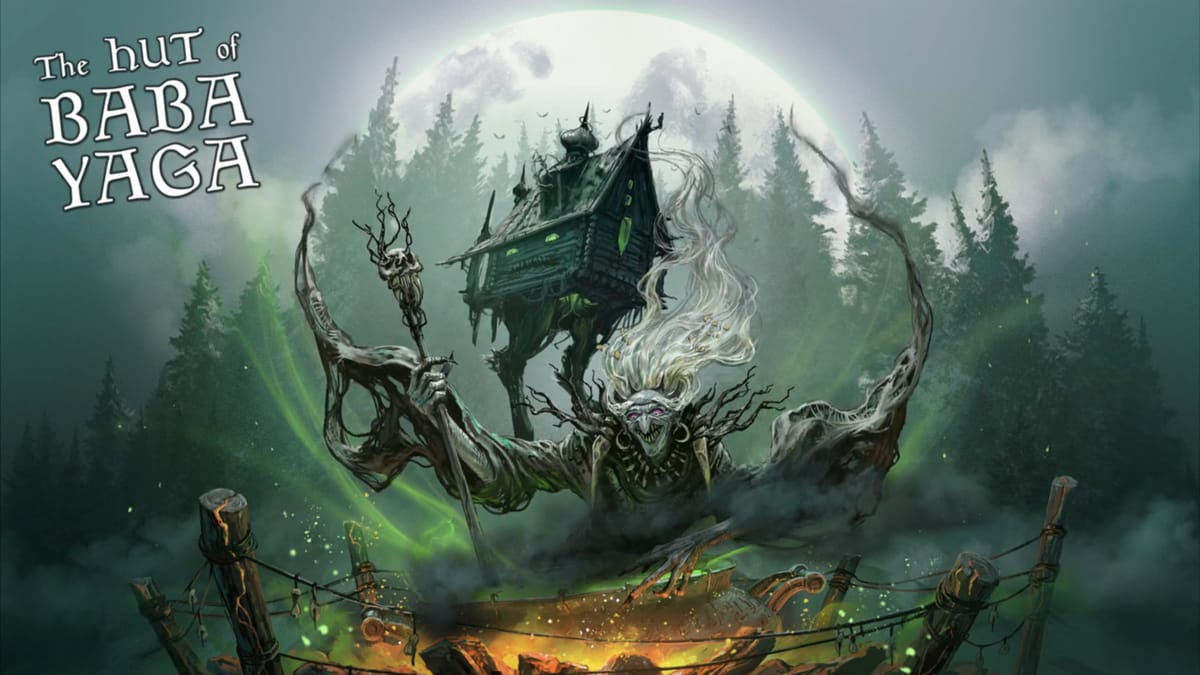
Since this wasn’t a remake but a reimagining of the quest, we kept the core ideas: Baba Yaga is seeking immortality, she has her artifact-hut with a mega dungeon, and the weird, unpredictable events that happen inside it. Beyond that, nothing is the same.
What we added, which we felt was missing from the original, is a strong dose of Slavic and Russian folklore. The creative process involved reading as many Russian fairy tales as we could find. Like more than 100! And Oh my God they are all weird. I do not know how many times we thought “is this for children? really?”
Did you consult the original designers or existing fan communities when preparing your adaptation?
In short, no. On the other hand there are several people who although outside of the team we trust with our lives. What we did was a lot of playtesting. Once we felt we were truly having fun, we figured that yes! This is it!
What did the planning phase of the Kickstarter campaign look like? Did you map out specific milestones, stretch goals, or audience segments from the beginning?
Yes, we carefully prepare everything in advance. For us crowdfunding is all about respecting the backers who trust you and support you. But…there is a but in this project. Initially we thought this campaign would be a small to medium one.
We got surprised to see 1000 followers within 3 weeks of promotion and that was the time we decided we needed to make this bigger and better. Our first move was to commission more art and also hire and additional writer, who will actually stay with us and is officially joining the team!
How long did you spend preparing the campaign before launch and what turned out to be the most time-consuming element?
I guess around four months. What is truly time-consuming in any campaign is the marketing side, how you approach your audience and promote the project. Although we have a small marketing department and we know what we’re doing (I think…haha), this time we collaborated with Wrenegade Crowdfunding, who are specialists in Kickstarter marketing.
If anyone reading this thinks there’s no one who can truly help with a campaign, I highly recommend looking them up. They genuinely care and know how to take your project to the next level. So yes, a special thank you to them!
Which channels were most effective for promoting the campaign?(e.g., Discord, Reddit OSR groups, Facebook, YouTube, influencers, newsletters)
Unfortunately, Facebook and Instagram ads are really the only reliable way to reach a broader audience. I’m not saying the other efforts didn’t help, but usually around 80% of your backers will come from proper marketing. If you are lucky and someone starts talking about your project in a thread, then yes, you might get a lot of help. But you gotta leave the community to choose you and not push it yourselves. That is the lesson I’ve learned over the years.
How did you build and animate your community before and during the campaign?
What we do is showing actual progress of our work and how we collaborate to bring it to life. I feel it is the only way and sharing behind the scenes moments is my absolute favorite!
Was there a moment in the campaign where you realized it would exceed expectations, or did the momentum come gradually?
I suspected it during the prelaunch when we reached 2k+ followers, but you know how it goes, you always have doubts. At some point mid campaign, seeing everyday to be better than the previous one, I admitted to myself that yes, this is going to exceed expectations by a lot. I felt like a child. It’s hard to describe the joy you feel seeing the community trusting your work!
What strategies helped you reach audiences who might not normally back niche or retro-inspired RPG projects?
I’ ll be super honest with this one. We played the card of “this is the hardest dungeon ever”. We challenged the modern audience, with their powerful 5e characters. We did it as a joke at first, but it worked! Now we have to deliver and prove that the challenge is real. Let’s see. We promise we won’t disappoint.
Looking back, what would you do differently in the campaign’s marketing or communication?
I really want to include pathfinder rules actually. But since we couldn't predict how huge this project would turn out to be, we got scared to take the risk and hire a PF2 specialist to help us out and our team is not familiar with this game and its rules. So yeah, that would be my no1 change.
What did you learn about your audience - their tastes, nostalgia, expectations, and willingness to explore “weird fantasy”?
I’m still waiting for the Kickstarter survey results to answer those questions fully. We made sure to include several questions that would help us understand people’s tastes and expectations. I think the main thing we’ve learned so far is that D&D is D&D, no matter the edition or art style. If an idea is intriguing and presented with passion and care, it will get the attention it deserves.
Do you see a growing appetite in the RPG world for reviving strange, surreal, or experimental adventures from the early days of the hobby?
Yes I do. I also see a lot of 5E players testing OSR and actually enjoying it. But publishing remakes is risky and copyrights make it hard. Baba Yaga is in the public domain so the choice for us was obvious. But, for instance, I cannot even remember how many request we had for “Tomb of Horrors”.
Are there other forgotten or underappreciated modules from 2E or earlier editions that you would love to reinterpret next?
Not exactly modules, but I would love to re-publish Dark Sun for 5E and make Psionists a thing again (the way they were portrayed in 2nd Editions). We even approached WoTC about it but they never replied. But yeah, this is the dream.
Do you plan to establish Side Quest as a studio specializing in adapting “weird classics,” or will future projects take a different direction?
No, not at all. In fact I am 90% sure that the next Side Quest project will be something addressing toddlers. But I cannot share much at this point. We are also developing a TT RPG dedicated to the “Saxons vs Vikings” period, but that needs a lot of time and testing, so I guess…2028?
How has the success of this campaign shaped your long-term plans—as a team and as a creator?
You’re giving me a great opportunity to share something that most people don’t really know, and it’s not their job to know. Having the right partners and collaborators, and trusting them, is the key to success. This campaign allows us to give them the payments they truly deserve, while also giving them the chance to create more content with less pressure. The team is now at a point where it can truly enjoy what it does, without constantly worrying about how the bills will get paid.
What can fans expect next from you? A continuation of the Baba Yaga theme, another classic revival, or perhaps something entirely original and experimental?
Well now we will focus for the next 6 months on our RPG Stories VTT. We are working on a 3rd Kickstarter for that project as we keep delivering more and more features and we truly want to make our VTT the best out there. From Side Quest specifically, we want to create (as I mentioned) something for young kids and provide content to parents that will allow them to introduce this magic world to their children.
We are already preparing some drafts for the art and the main writing idea, and we approach specialists who work with children to better understand how we should approach such a project! I cannot wait to share more, really, but I just can’t at the moment!
This interview is presented in partnership with Strigovia.
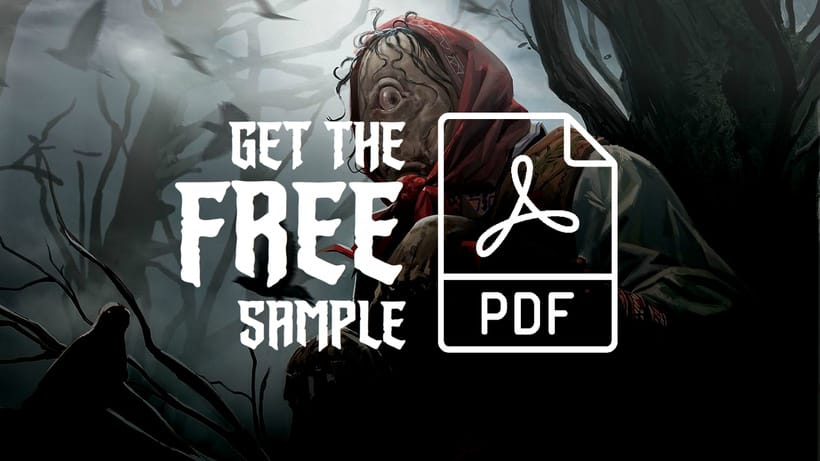
Strigovia is a dark, Slavic-inspired tabletop RPG where what we call “magic” is not a gift, but a debt owed to the ancient Forest — a power that listens, remembers, and always collects. There are no carefree spells or heroic fireballs here, only whispered rituals, blood-bound bargains, and slow transformations waiting for those who ask for too much.
This is low-fantasy horror focused on survival, painful choices, and stories that linger long after the dice stop rolling.