Reliability Over Hype: Russ Morrissey on Running an RPG Publishing Company
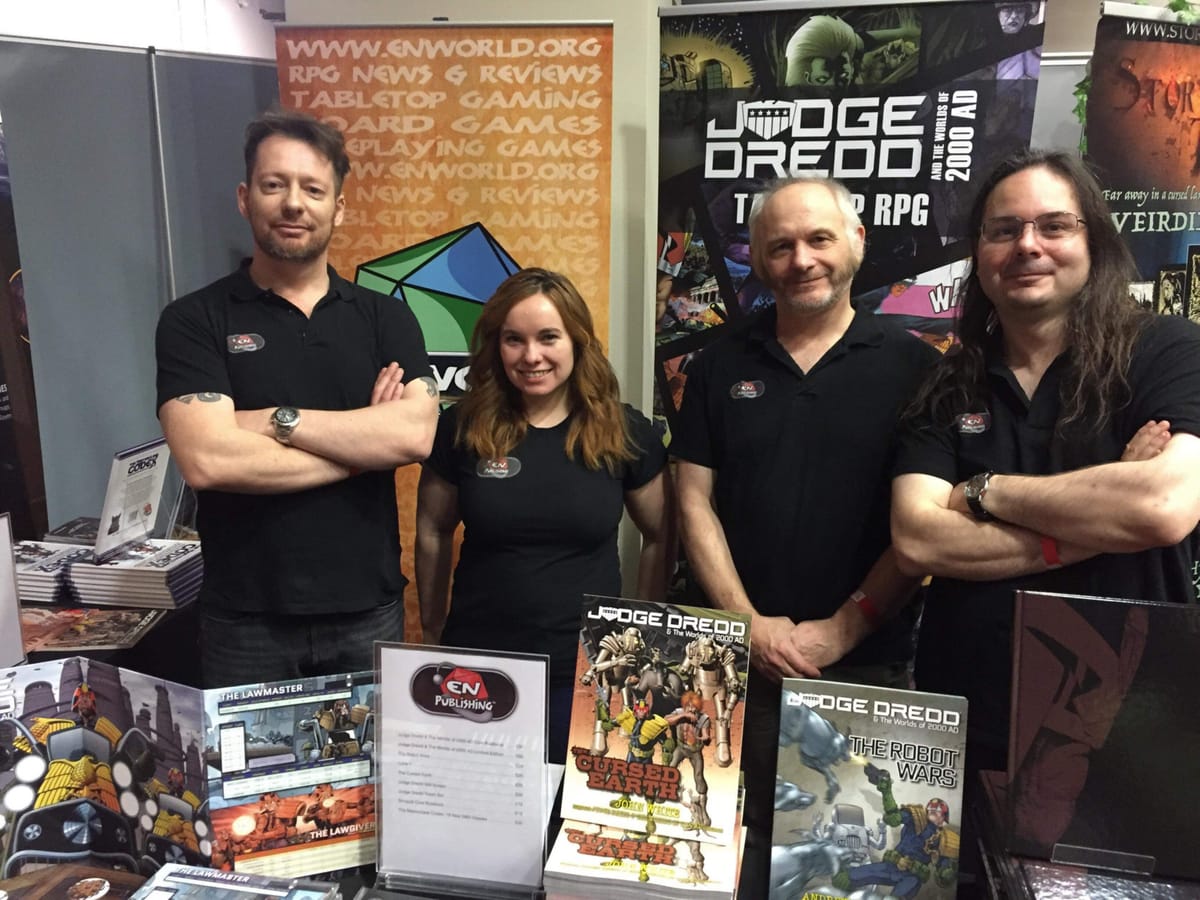
For more than 25 years, Russ Morrissey has been a constant presence in the tabletop RPG world—often behind the scenes, sometimes at the center of major conversations, but almost always doing the unglamorous, long-term work of building infrastructure for the hobby. As the founder of EN World and the driving force behind EN Publishing, Morrissey’s career offers a rare, longitudinal view of how the RPG industry has evolved from the early days of the Open Game License to today’s crowdfunding-driven, platform-heavy ecosystem.
What began in 1999 as a fan-run news site and a small publishing experiment—never intended to become a “real company”—slowly, almost accidentally, transformed into a full-fledged publishing house. Along the way, Russ had to navigate the often painful transition from fan ideology to business reality: learning how to run a company, manage people’s livelihoods, deliver products reliably, and make decisions that balance creative ambition with operational constraints.
In this conversation, we talk with Russ Morrissey about that evolution: from Natural 20 Press to EN Publishing; from reporting on games to publishing them; from writing and designing to running a business. We dig into the thinking behind Level Up: Advanced 5th Edition, the origins of the W.O.I.N. system, the philosophy guiding 63 successful Kickstarter campaigns, and why reliability—not hype—may be the most important skill in modern RPG publishing. We also touch on AI, community longevity, digital tools, and what it really takes to build a sustainable RPG company in 2026.
Onwards!
What inspired the creation of EN Publishing, and how did the journey begin?
The company launched in 1999 and was called Natural 20 Press at the time. Its first book was called Wild Spellcraft by Ryan Nock. This was in the earliest days of the Open Game License and platforms like RPGNow (which later merged with DriveThruRPG) at a time when the volume of third party product using the Open Gaming License was a small fraction of what it is now. We weren't the first, but we were one of the first.
We didn't plan on being a full-on publisher at the time--this was just a side gig to the bigger task of game news reporting. We were taken by surprise by how well it sold. Of course, those numbers are small fry compared to what big successful crowdfunders do these days, but they were big number to us.
Can you tell us how EN World evolved into a full-fledged RPG publishing house?
It happened organically. There was no set plan--we continued to produce content with our 'side hustle' and one day, a few years later, we realised we had accidentally evolved into an actual publishing house. By mistake, almost. We were doing all the things that a publishing house does, but we hadn't realised that that is what we had become.
What were some of the biggest challenges you faced in transitioning from a fan-based platform to a professional company?
I guess learning how the 'business' worked, and altering decision-making processes to include aspects of business realism rather than just fan ideology. Understanding that what we, as fans, wanted to do wasn't always compatible with what was practical or possible within the confines of a company because decisions started to have consequences. People were relying on us for work so they could pay their bills.
It became very apparent early on that the job of being a writer/designer and being a publisher were two very different things, requiring very different skill sets. And the latter skill set isn't necessarily the one that people aspire to. I didn't, at the time, have any interest in running a company, managing accounts and payrolls and taxes, doing logistics and distribution, having budget meetings, of all things!
None of that sounded like fun to me--I wanted to create stuff! Luckily, these days I have somebody who runs the day-to-day business side of things allowing me to indulge my creative side more often.
Level Up: Advanced 5th Edition has added a lot of depth to the original 5E ruleset—what motivated you to build your own version?
This was in--I think--2019 or so. We'd been playing 5E for a few years and we found we were starting to want a little more out of it. We still loved the game, and we still wanted to play it, but we felt we'd done everything there is to do in 5E as it was written. So we sat down and asked "What is it we want out of the game?" and it turned out we wanted a more 'advanced' version.
And by 'advanced' I don't mean 'complicated', I mean 'more in-depth, more flexible'. So we batted ideas about for a while, before holding a massive survey which tens of thousands of people responded to, asking them what they would like to see, what they would change. We used that to form a blueprint for our game, and set about making it!
In your view, what sets Level Up A5E apart from other 5E-based systems on the market?
I have to be honest, I haven't played any of the others, so I have no point of comparison. We released Level Up in 2021, before the 'open gaming crisis' with helped spur a whole bunch of standalone 5E adjacent games, but by then we not only had our game out and in stores, but were well into the product line with new books, a magazine, and plans for a starter set.
I can tell you what's great about Level Up though. A full exploration pillar, a flexible heritage/culture origin system, meaningful decision points every time a character levels up, redesigned monsters and monster formats... I could go on!
Sometimes I see people asking "Why would you make a bigger version of 5E, when everybody wants slimmer versions?" and my answer is that there are dozens of slimmer versions out there. Take your pick! They're great! But we made the game we wanted, we're probably the only ones doing specifically this, and it turns out that enough people like what we made. Choice is great--pick the version of 5E which works for you!
Where did the idea for the W.O.I.N. system come from, and how do you see it fitting into the broader TTRPG ecosystem?
It was inspired by a few things. I'd always loved life-path systems, such as those used in Traveller. I was fond of d6 dice pools. I wanted a toolkit style game with robust ways to build worlds and monsters. And I loved FASA's Star Trek game in the 80s. WOIN originally was just meant to be the sci-fi variant, the game now called NEW. The fantasy variant, OLD, came later in the planning process.
The modern version, NOW, which is all about cinematic action heroes, was proposed to me by a freelance writer, Mike Myler, who offered to write a third book in the trilogy. I'm still very proud of the game--it's getting a little long in the tooth now, but we put out a starter set last year which came out beautifully, with three adventures--one for each genre--tons of pregenerated characters, poster maps, dice, etc. which has resparked it all.
I don't know what the future of the game is longterm, but we do have some more short/intermediate term things in the works.
Awfully Cheerful Engine! is quite a departure in tone—was that project a deliberate break from your more serious systems?
I don't know about deliberate. Again, it was a case making the games we want to play, and hoping there's an audience for them! In this case, my favourite TTRPG of all time was West End Games' Ghostbusters RPG back in the 80s. I don't know that I've ever seen such a perfect fusion of IP and system, even to this day. Also, as a random fun fact, it was the first ever dice pool RPG, and the precursor to many others, including WEG's own Star Wars.
But I digress. I reached out to Sandy Petersen , the co-designer of that game, and he was kind enough to write a foreword for the Awfully Cheerful Engine! ACE is my go-to for one-shot convention games, quick pick-ups when the main game can't run, or for introducing folks new to TTRPGs.
How important has Kickstarter been in the growth and success of EN Publishing?
Very. Crowdfunding is for us, like many others, our primary business model. It probably makes up a third of our revenue. But more importantly, it also gets eyes on a project; it's a store and marketing platform all in one. While we could manage without it, we wouldn't want to!
Could you share some insights into your campaign strategies—how do you balance community-building, paid ads, and influencer outreach?
That's a big question! We've been at this a long time, so our methods have changed over the years. We haven't yet tried any influencer outreach, though I have seen others use that strategy with successful results. We run ads for our larger campaigns, usually via Backerkit's marketing service, which tends to be good for a (net) 10% boost or so in a campaign's funding.
And we have a large number of previous backers, many of whom return to back our new projects. I guess the biggest strategy we adopted early on and which has not changed is that we focus on fast and reliable fulfilment.
We're very proud of that record. We do that by having the product in hand--in prototype form of course--before we launch the campaign. The crowdfunded is then for the manufacturing costs only, not the development costs, and we are able to fulfil digital rewards immediately a campaign ends, and launch a print run immediately the funds clear.
One way we maintain that is that we don't usually have stretch goals (or if we do, digital ones only which won't affect or delay the core deliverable).
Sometimes people tell us how wrong we are not to have a bunch of stretch goals disappearing into the mists of the future years hence, but with nearly 60 fulfilled Kickstarters and close to $4M in funding, we're more than happy to stick with our gameplay. Slow and steady, that's the trick. We're not chasing one big flashy success, we're building on lots of medium-sized successes!
What was the most surprising thing you learned from running your first major crowdfunding campaign
I can't even remember what campaign that would have been! But I think it would probably have been the roller-coaster. Nowadays, running a crowdfunder is something we know how to do, what to expect, and can even predict with near accuracy how well each will do. But early on, it was a nerve-racking experience. We didn't know about the 'U' shaped curve of a campaign, and the emotional high of a successful launch followed by two weeks of nearly nothing happening, before an uptick at the end again is tough to get your head around at first.
And I made the mistake of letting Kickstarter notify me by email whenever somebody pledged or cancelled a pledge. That's not a good idea!
You've built a loyal community over the years—what’s the secret to keeping players and readers engaged long-term?
I wish I knew! I was fortunate in that EN World--our TTRPG news site--launched when the space was not crowded. I don't know that I could do that again today. I am sometimes surprised that the community is still thriving 26 years later. Sure, the names and faces change, but there are some folks who have been there as along as I have. In an age of rapid-fire social media and transitory exchanges, I think there is still a space for slower, long-form discussion.
It scratches a different itch. Plus, on the news front, there's just the secret formula of just turning up every day, day-in, day-out, year after year, doing the job. That's the way you earn a reputation for reliability--EN World has outlasted so many other platforms which have come and gone, many of which I can't even remember, just by turning up each day to do the work. Love it or hate it, one thing you can rely on is that it will still be there tomorrow. And, I hope, for years to come--but all I can do is keep turning up and hoping for another year.
What does your typical development process look like when creating a new game or product?
Usually I, or somebody else at ENP, will have a concept for a book. We'll talk about it, plan out a scope, and then reach out to writers. Often we'll have a lead writer, who will also be managing some other writers. At the same time, our art director will be reaching out to artists. Playtesting happens when the project is in draft form, and sometimes that will result in significant changes--Level Up had a series of big, public playtests which involved thousands of people, and big feedback surveys.
Other things might just be internal playtests, or we might try things out at conventions, such as our new card game, Split the Hoard, which we demoed at conventions for a couple of years in prototype form before we released it. So it varies, depending on the product.
What roles or skill sets do you consider essential in a modern RPG publishing team?
Reliability. If you are reliable, you are ahead of 99% of people. Turn up, do the work, hit deadlines, and repeat. Whether you are a freelance writer or artist, or a CEO planning crowdfunders, be reliable and do the thing that you said you'd do when you said you'd do it, and keep doing that over and over. It doesn't matter if you're the best in the world at what you do if people can't rely on you.
Do you primarily work with an in-house team, or do you collaborate with freelancers and third-party creators?
It varies. We have a small in-house team who handle logistics, a broader pool of freelancers for art, writing, editing, layout, etc., and an amazing third-party creator community who have made something like 200 Level Up compatible products to date.
What’s your perspective on the role of AI in TTRPG publishing—do you see it as a helpful tool or a creative threat?
We have ethical issues with generative Ai used in creative industries. We don't use it, and all our content is made by humans for humans. I don't know what the world will look like in 5 years or 10 years, but AI is clearly inevitable. I hope we can carve out a niche as artisan human-created content amid the tidal wave of generic AI-generated content which is coming.
What future directions are you most excited about—new systems, expansions into multimedia, or something else entirely?
I don't have any specific plans for anything, but my mind is starting to get that 'new system' itch again. Right now, I don't know what that might look like. Stay tuned, I guess?
We're also looking at smaller lines. Much of our stuff involves big, heavy hardcover books. Some diversification into smaller short digest-sized D&D adventures, solo gamebooks, things which aren't such a big ticket investment for the customer. It's a risk, spending $150 on three giant hardcovers!
Do you see opportunities for EN Publishing to further develop digital experiences like VTT integration or interactive rulebooks?
We have two major online platforms for Level Up--A5E.tools, which is a massive, free rule compendium; and Level Up Gateway, which is a character builder and campaign manager. Both of those are ongoing projects. With the advent of things like D&D Beyond, it is becoming incumbent on publishers to provide similar tools. One of the first things we always get asked is about character builders.
What advice would you give to someone looking to start their own RPG publishing company today?
Use all the resources available to you. Crowdfund. Pay fairly, on time, and don't exploit. Don't overpromise. Pay your taxes. Don't use generative AI. Don't worry that others might be more successful than you--success isn't a zero-sum game. Keep going, and remember that it's not about one big hit, it's about building a steady, reliable, profitable company. And most of all, remember that having a creative job you love is a privilege and a blessing, and enjoy it while it lasts.
Thanks Russ!
This interview is presented in partnership with Strigovia.
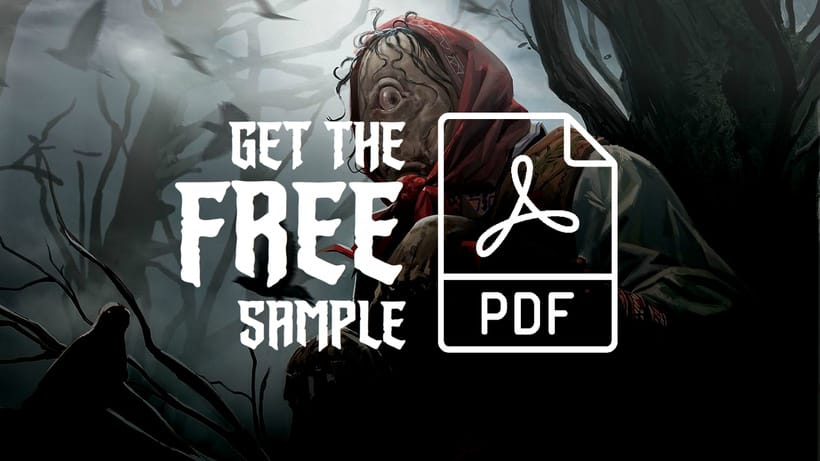
Strigovia is a dark, Slavic-inspired tabletop RPG where what we call “magic” is not a gift, but a debt owed to the ancient Forest — a power that listens, remembers, and always collects. There are no carefree spells or heroic fireballs here, only whispered rituals, blood-bound bargains, and slow transformations waiting for those who ask for too much.
This is low-fantasy horror focused on survival, painful choices, and stories that linger long after the dice stop rolling.