Not Just Pretty Maps: How Natwuns Became a Table-Tested TTRPG Brand

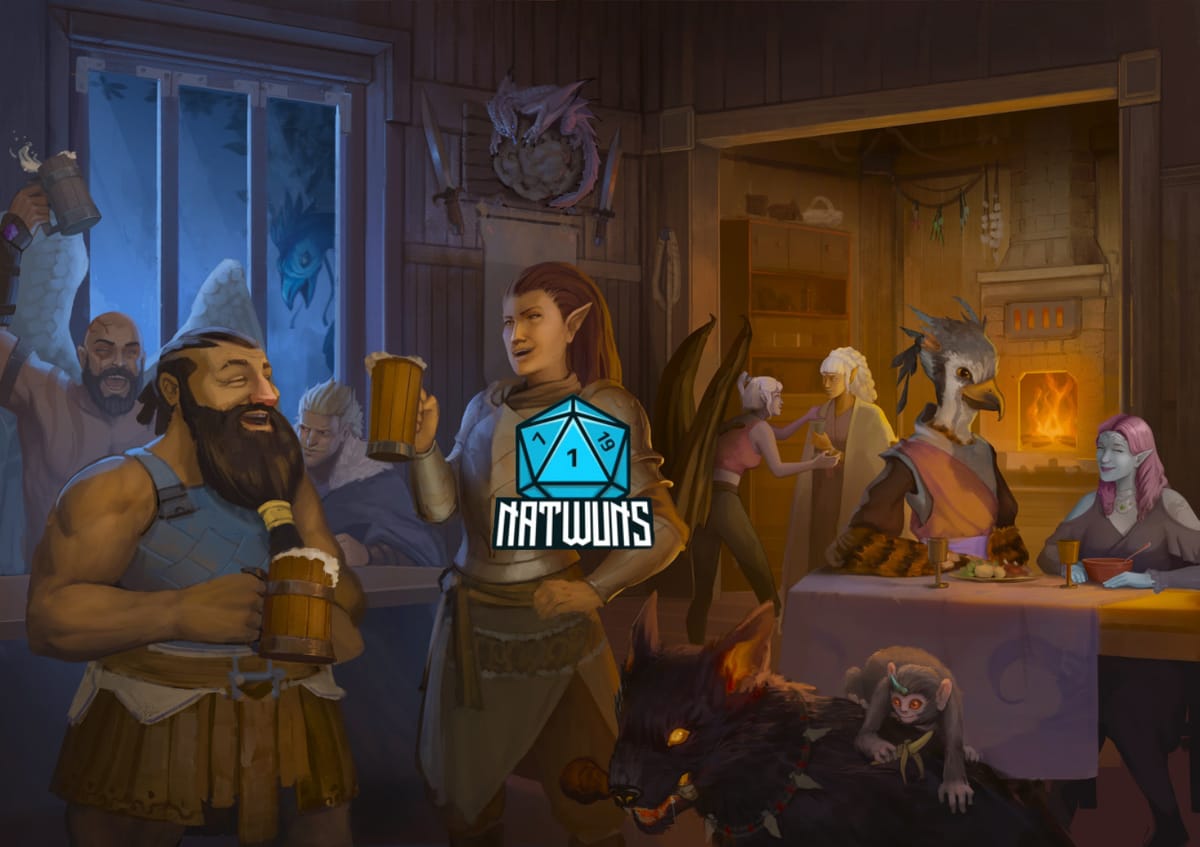
From a single, practical need at the table to a recognizable creative brand with multiple successful Kickstarter campaigns, Natwuns is a story of growth rooted firmly in play. What began as a hand-drawn map made to replace a generic Roll20 background quickly turned into something bigger—not because of a master plan, but because the work kept solving real problems for real players.
At the center of this journey is Karl Nicolas: librarian, writer, editor, and the creative mind behind Natwuns. His projects don’t start with market analysis or trend-chasing. They start with a question asked during a session, an idea tested by players, and a quiet realization that what worked at one table might work just as well at thousands of others.
In this interview, we talk with Karl about that process in depth. We explore how Natwuns evolved from maps into books and decks, why Tome of Mystical Tattoos struck such a deep chord with the TTRPG community, and how a librarian’s mindset shapes supplements that are not just imaginative, but genuinely usable during play.
This is also a candid conversation about building a community without overextending, treating Kickstarter as an extension of product design rather than pure marketing, and converting first-time backers into long-term supporters through quality and continuity. We dig into stretch goals, feedback loops, launch timelines, and the often invisible decisions that protect creative focus while still welcoming community input.
Finally, Karl shares a clear-eyed perspective on AI, ethics, and audience trust in a brand built on hand-drawn art—why Natwuns has drawn firm boundaries, and how listening closely to backers continues to shape every release.
If you’re interested in how sustainable, table-tested TTRPG products are made today—from the first spark at a session to a polished book on the shelf—this conversation with Karl Nicolas is well worth your time.
Onwards!
Natwuns started as “beautiful hand-drawn maps” for tabletop games: what was the very first spark that made you publish your work publicly?
The first spark was honestly just another D&D-inspired moment. We were playing on Roll20, and at the time our “maps” were basically just Google image wallpapers behind the tokens and grid.
One of my players said that for the next session, “(They) want to see something that represents where we are.” That clicked with all of us immediately, because it wasn’t about making something pretty, it was about making the world feel realer for the group. I worked with one of my artist friends for a proper map for that next session, shared it, and the reaction was strong enough that I thought: maybe this isn’t just something for us. Publishing what we created publicly started as a way to share that map and the same feeling of immersion with other folks.
When did Natwuns shift from “maps” into larger product lines like books and decks, and what unlocked that confidence?
The shift happened the same way the maps did: a player asking for something and the table “stress-testing” it!
A good friend of ours wanted some sort of magic tattoo implemented in the game, so we designed one, illustrated it, and built it into the story. By the time we had a small collection, we realized we weren’t just making a one-off homebrew, we were sort of building a system and establishing a style.
That’s what unlocked the confidence.
We had proof that the ideas worked at the table, and we had a process in place. At that point, turning it into a book felt like a natural step rather than a leap.
Your bio mentions you’re a librarian, writer, and editor. How did those roles shape how you design and ship products?
Those roles shaped various things about how we build and deliver products. The writing and editing side really only started getting sharpened once we committed to book-format releases, but the librarian part was there from day one: thinking about structure and how people actually use reference materials at the table.
A good supplement isn’t just creative, it’s user-friendly and usable. So I’m always asking: Can someone locate what they need quickly? Does the layout support play? Are rules consistent and readable? That librarian mindset born from having read other books and supplements, paired with (an editor’s) attention to tone and polish, is what helps us ship work that feels both imaginative and professionally built.
What problem or “itch” were you trying to solve with the very first Tome of Mystical Tattoos campaign, and what surprised you most once it launched?
The “itch” was adding magic items that feel like they belong to the character and the story, not just the inventory. During the early pandemic, D&D became a huge anchor for me and my friends, and the things that kept sessions alive were the vehicles that created narrative moments. Tattoos felt perfect for that because they’re personal, visually powerful, and story-forward.
What surprised me most after launch was how universal that desire was. People weren’t just buying the designs, they were looking for flavorful tools that let them tell better stories at their own tables. The response confirmed we weren’t alone in wanting items that are both balanced and felt ready to drop into your game lore.
Looking back across the Tattoos series, what did you deliberately keep consistent, and what did you reinvent each time?
Consistency has been a deliberate strategy. We’ve kept the core mechanics, the presentation and the art direction consistent so that each Tome feels like it belongs on the same shelf, in the same world. Readers know what they’re getting: solid design, cohesive visuals, and content meant to be played, not just read.
What we reinvent each time is the edges of the concept, usually driven by the community and by our own curiosity. Each book pushes into new “ink territory” such as transformative themes like full-body transformation, or expanding into ideas like inky familiars. Those are fresh creative challenges, but they still sit inside the same consistent framework that makes the series accessible.
How did you build your community before Kickstarter: Patreon, social, newsletter, and which one ended up being the “engine” for launches?
Our community developed in different lanes. Patreon is primarily where our map audience lives, and that audience often has different expectations than those joining us for a Kickstarter book campaign. For launches, the real engine has been social media and Kickstarter itself, because that’s where discovery and momentum happens.
That said, the most reliable driver for repeat support is direct communication with people who have already backed us. A newsletter or update lets us speak to the community that’s already invested in our work, and it’s consistently the most effective way to rally returning backers and build early campaign traction.
What’s your approach to nurturing “casual fans” into repeat backers across multiple campaigns?
We keep it simple.
A lot of our casual fans become repeat backers when we make the next campaign feel like a natural “next volume” rather than a totally separate product. We’re very upfront about that and we’ll literally ask: if you enjoyed the last Tome, do you want to keep building your collection?
We haven’t built a dedicated hub like a Discord, so we focus on two things instead: delivering a strong experience on the last product, and staying visible between campaigns through WIP shares and clear previews (within our updates). In practice, the best conversion tool is quality plus continuity: people come back because they had a great time with the last release and they can see exactly what they’ll get if they support us again.
What community rituals worked best for you: WIP posts, polls, behind-the-scenes, live streams, free samples, or something else? Why?
WIP posts and structured feedback loops, by far.
Showing work in progress gives people a reason to keep checking in, and inviting feedback makes them feel like they’re part of the process, not just watching from the sidelines.
The most effective ritual has been explicitly highlighting where backer voices shaped the final product. When supporters can see their influence reflected on the page or in the finished book, it creates a real sense of shared ownership, and that’s what keeps people invested across campaigns.
How do you handle feedback loops without losing your creative direction? What feedback do you always act on, and what do you intentionally ignore?
We treat feedback as input, not direction. The foundation of the mechanics and the content stays consistent because it’s built on a core creative vision that we’re confident in. Most of the feedback we get isn’t about fixing broken systems, it’s about exciting possibilities, and we love to listen to that.
What we almost always act on is clarity and usability: anything that improves readability, reduces confusion, or makes the content easier to run. We also pay close attention when multiple people independently point out the same friction point.
What we intentionally ignore is feedback that pushes the product away from its core identity or would balloon scope without a proportional benefit. And we don’t make those calls alone. We look at everything as a team and decide what’s realistic to implement.
Do you run a dedicated community hub (Discord, forum, etc.) and if not, what’s your reasoning? If yes, what rules/moderation patterns keep it healthy?
We don’t run a dedicated community hub. The main reason used to be (and still is) capacity and consistency. Most of us have full-time jobs, and we’d rather not launch a Discord unless we can be truly present for our community. A community hub only works if people feel heard and supported, and we don’t want to promise that level of responsiveness unless we can maintain it long-term.
So instead, we keep the community active through the channels we can reliably maintain: Kickstarter campaign updates, social media content, and feedback moments that give supporters a clear way to participate.
Walk me through your marketing timeline: how many weeks/months do you plan pre-launch, and what are the “non-negotiable” milestones?
Our timeline starts earlier than people. We start brainstorming right after a campaign ends, and we’ll often develop early tattoo concepts and mechanics as far as a year in advance. Those early drafts are what give us the momentum to build the campaign page when launch gets closer.
In terms of non-negotiables, two are huge: having artists and writers committed around six months before launch, and having a strong bank of pre-launch visuals and written content ready. If we’re sitting on roughly 50 preview-ready pieces, like tattoo drafts, character illustrations, and mechanics highlights, we know we can sustain marketing consistently and show real deliverables instead of just hype.
How do you decide the core promise of a campaign page (headline, hero images, bullet benefits) and how many iterations does it usually take?
We start messy on purpose. The first pass is essentially us dumping everything we want to say onto the page: rough titles, raw notes, unfiltered ideas. Then we take our time to shape it into what this product is, who it’s for, and why it matters at your tables.
We polish the headline, select hero images that communicate the vibe instantly, and tighten the benefits so a backer can understand the value they will get in under a minute. It usually takes multiple iterations, but the key is that the creative vomit draft is foundationally everything we want to build upon, and the later passes give it clarity and confident voice.
What’s your update strategy during the campaign (frequency, structure, CTA), and what have you learned about what updates actually move pledges?
We’ve learned that updates are less about pushing new pledges and more about retaining momentum and keeping existing backers excited. In fact, we’ve had backers tell us when we’re updating too often, which is useful feedback in itself.
The updates that perform best are the ones that show responsiveness and progress: what we heard, what we’re doing about it, and what’s coming soon. If there’s a CTA, it tends to be light and specific, like sharing the campaign or checking a new reveal. We value building trust with backers. Updates reassure people that we’re listening and executing.
How do you structure stretch goals so they increase excitement without blowing up production risk or scope creep?
We design stretch goals to reinforce what people already backed, not to transform the project into something too big or creating too much risk. We sift through ideas, including great backer suggestions, and prioritize goals that add value in controlled ways: a few additional pages, expanded options, enhancements to an existing add-on, or upgrades that improve the core deliverable.
The guiding principle is: stretch goals should feel like upgrades, not entirely new projects. That keeps excitement high while protecting the timeline and production quality.
Which parts of the campaign do you treat as product design vs. pure marketing (rewards design, pricing ladder, bundles, add-ons)?
Feels like there’s a little bit of both those elements in every part of the campaign, no?
We also lean on external expertise when we need it. We work with partners, like BackerKit that has been part of our process from day one. Partners and past backers help us pressure-test ideas, and bring a marketing lens to the table when we’re deep in creative mode. At the end of the day, we’re primarily creators, so listening to different voices helps us find the balance between a great product and a campaign that communicates it effectively.
Which channels consistently drove the highest-quality traffic for you: newsletter, Instagram, X, Patreon, Reddit, cross-promos, influencers, ads?
Historically, our highest-quality traffic came from paid promotion on Facebook, largely because BackerKit’s ad expertise helped us target the right audiences and convert efficiently. As we matured, influencer partnerships became a major driver of traffic, especially when we teamed up with trusted voices in the TTRPG space like Deck of DM Things and Dicecream.
Once those creator partnerships were in motion, we started seeing strong spillover from channels like TikTok and Instagram, where the content format lends itself well to showing the art, the vibe, and quick product value at a glance.
How do you approach cross-promotion with other creators? What do you offer, what do you ask for, and how do you evaluate fit?
We keep cross-promotion straightforward and community-first. If someone is in the broader TTRPG space and reaches out, we’re generally open to it. We’ll ask what they’d like us to include in an update, and we’ll propose a reciprocal placement so both projects get meaningful visibility in front of interested audiences.
Fit is mostly about relevance. If the product aligns with tabletop audiences and the creator communicates clearly and professionally, it’s usually a good match. My general advice to other creators is to be transparent and polite, and to treat cross-promo like a relationship, not a transaction, especially on Kickstarter where community trust matters (every cross-promo is essentially an endorsement).
Have you pursued press coverage or platform features (e.g., “Project We Love”) and what, in your view, increases the chances of getting noticed?
Yes, we earned a “Project We Love” for Tome 3, and we definitely felt the bump. It’s also a point of pride, because it signals that Kickstarter staff see quality in what we’re building.
That said, the coverage that has felt most impactful is still within the TTRPG creator ecosystem. When respected creators choose to partner with you, they’re lending trust they’ve built over years, and their communities tend to take that seriously. In our experience, that trust-based attention often converts better than other avenues, because it reaches people who already care about this kind of product.
Do you use paid ads at all? If yes: what platforms, what budgets, and what metrics decide whether you scale or stop (CAC, ROAS, pledge conversion)?
We do use paid ads, but the operational specifics are typically handled by our marketing partners. From a performance standpoint, we’re happiest when we’re seeing roughly a 2.5x to 3x ROAS on a platform like Facebook. That’s usually the signal to maintain or scale.
More recently, we’ve also shifted some emphasis toward community-powered growth: cross-promotions, creator partnerships, and influencer alignment. Those methods don’t just drive traffic, they build credibility, which compounds across campaigns.
Where (if anywhere) do you use AI today: campaign copy, editing, customer support drafts, analytics, scheduling, ideation, or production workflows?
We don’t use AI in our production workflow. In the TTRPG Kickstarter space, audience expectations are very clear: people value hand-crafted work, and many backers are actively wary of AI involvement. So, we’ve made a deliberate choice to keep the creative process fully human.
How do you think about AI ethics and audience expectations in a brand rooted in hand-drawn art? Do you disclose tools, set boundaries, or avoid certain use cases entirely?
Our brand is rooted in hand-drawn art and creator trust, so we set firm boundaries. Our current stance is to avoid AI use in writing, artwork, and other core creative deliverables, and we communicate that expectation when onboarding team members and contractors. Our team members need to disclose any time they stray from this directive, in any part of their own creative process.
We’re not trying to make a philosophical debate out of it, we’re responding to our audience and our values: people back us because they want human-made work and a transparent process. If that landscape changes in the future, we’ll evaluate it carefully, but for now we have chosen this path!
Thanks Karl!
This interview is presented in partnership with Strigovia.
Strigovia is a dark, Slavic-inspired tabletop RPG where what we call “magic” is not a gift, but a debt owed to the ancient Forest — a power that listens, remembers, and always collects. There are no carefree spells or heroic fireballs here, only whispered rituals, blood-bound bargains, and slow transformations waiting for those who ask for too much.
This is low-fantasy horror focused on survival, painful choices, and stories that linger long after the dice stop rolling.