How Son of Oak Turned Community into Kickstarter Success

Over the years, Son of Oak Game Studio has shown that Kickstarter success in the TTRPG space is rarely accidental. From City of Mist to Legend in the Mist, Amit Moshe and his team have built their campaigns not on short-lived hype, but on something far more durable: community, a distinctive visual identity, and a willingness to truly listen to players. In this interview, Amit explains why a mailing list and Discord server can matter more than flashy promotional tactics, how to tell the difference between marketing that looks impressive and marketing that actually converts, and why, in the age of AI, authenticity and human creativity may become even more valuable for TTRPG creators.
Onwards!
You’ve run multiple successful Kickstarter campaigns, from City of Mist to Legend in the Mist. What were the key elements that helped you build momentum early in a campaign?
It was always about building community. Even with the first City of Mist Kickstarter, probably the biggest driver was the free download which gradually allowed us to build a mailing list. Today, 10 years later, that mailing list is still our biggest asset when launching a Kickstarter campaign, and of course we continue to grow it over the years. The second biggest asset is probably our Discord server. These are all just other words for the strength of our community, which we are always so thankful for.
How did your approach to Kickstarter evolve from the first City of Mist project to Legend in the Mist? What lessons did you carry forward?
I think in City of Mist I had a very specific game that I wanted to create, I wasn't thinking so much about a wider appeal. Today I am definitely much more aware of what kind of audience there would be for our next project. There is room of course for bigger and smaller projects, but I have more awareness to that. I've also learned a lot more about what forms of marketing work and what forms work less. For example, the importance of community as I said has truly shone through and became very clear over the years in comparison to other, flashy marketing tactics such as actual play events, which we have not found to drive the same kind of interest as they may appear to. It's just a lot of little data points of experience that were collected over the years. But the essential approach of a visually appealing game has stayed the same throughout all of our projects.
Many creators struggle with setting realistic funding goals. How do you balance ambition with pragmatism when designing a campaign budget?
Over the years we've learned how to create budgets that are focused and stay on track. Admittedly, this is easier to do when developing a supplement or an extension. When we create a core book, it's a lot harder to control because it often needs additional content to become the premium high quality game that I'm envisioning. Once we lay the groundwork with the core book, it's easier to plan and know what a supplement looks like. So this kind of balancing really starts at the crowdfunding planning stage and follows us throughout the development of a product, but it's always a dance and the tricky one at that. It's just a part of a publisher's work.
Legend in the Mist raised over $850,000! What specific strategies (ads, stretch goals, partnerships) contributed most to its success?
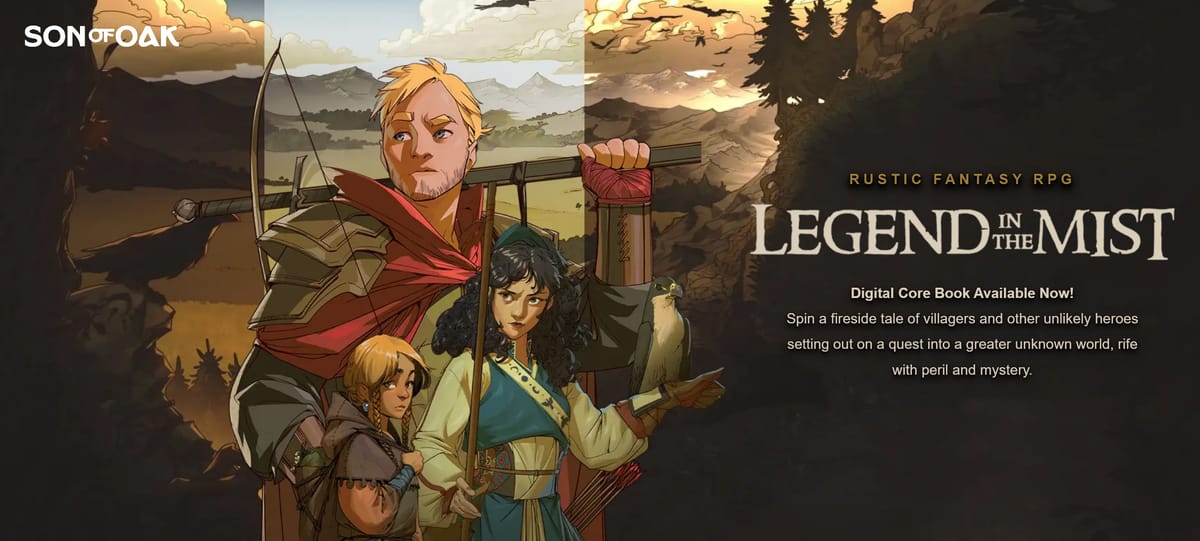
This may sound strange but I think the strongest element for Legend in the Mist crowd funding was it's art style. People just instantly responded to the pre-launch ads from the moment we put them out there and it was evident that we were tapping some kind of a feeling or want in the ttrpg community for a more rustic, wholesome, and heartfelt fantasy game. We use the same strategies we've always used, there wasn't anything uniquely different there, but what we put out into the world was resonating much more in comparison to previous game lines.
How far in advance do you start preparing for a Kickstarter launch, and what does your pre-launch checklist typically look like?
We always say that we want to start 6 months in advance, but it never really works LOL. In practice we start 3 to 4 months in advance, with the first month being an intensive product design phase and the rest marketing. Recently we also started doing a lot of the development ahead of time, especially with Cairo otherscape which required working with Egyptian writers in Cairo which took a while to set up but was so incredibly rewarding.
What role has visual branding played in the success of your campaigns—especially with your uniquely stylized art direction in City of Mist and Otherscape?
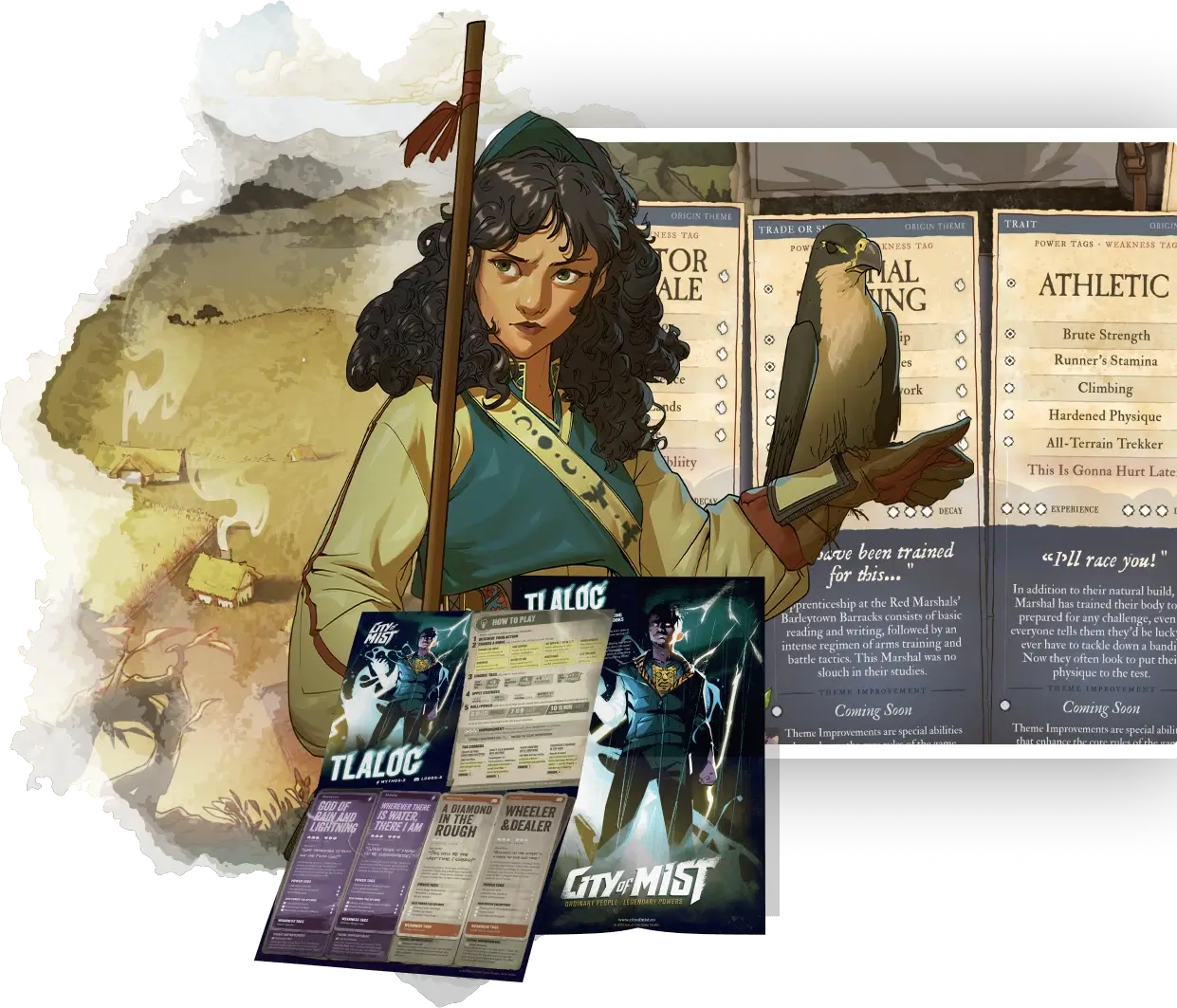
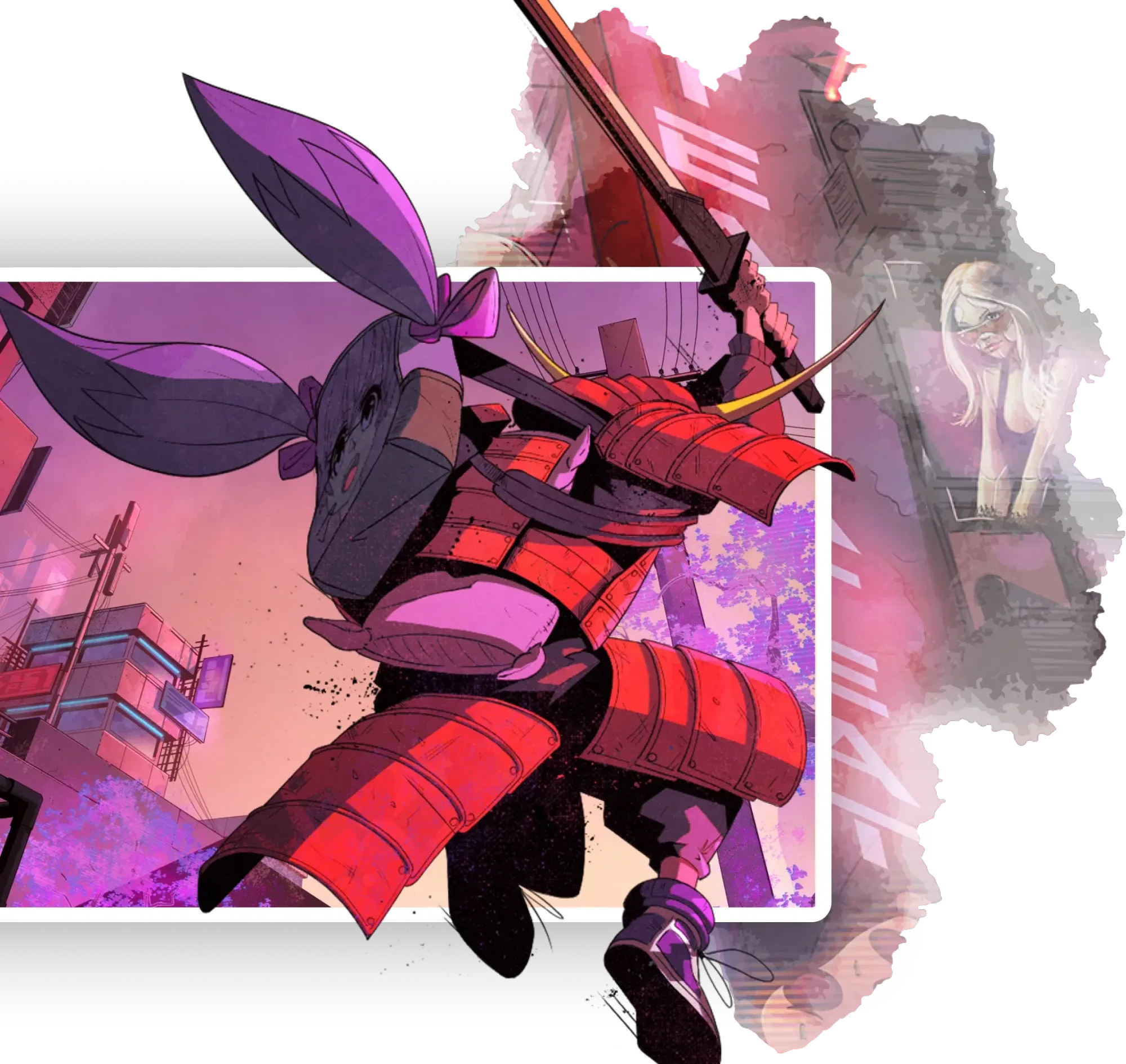
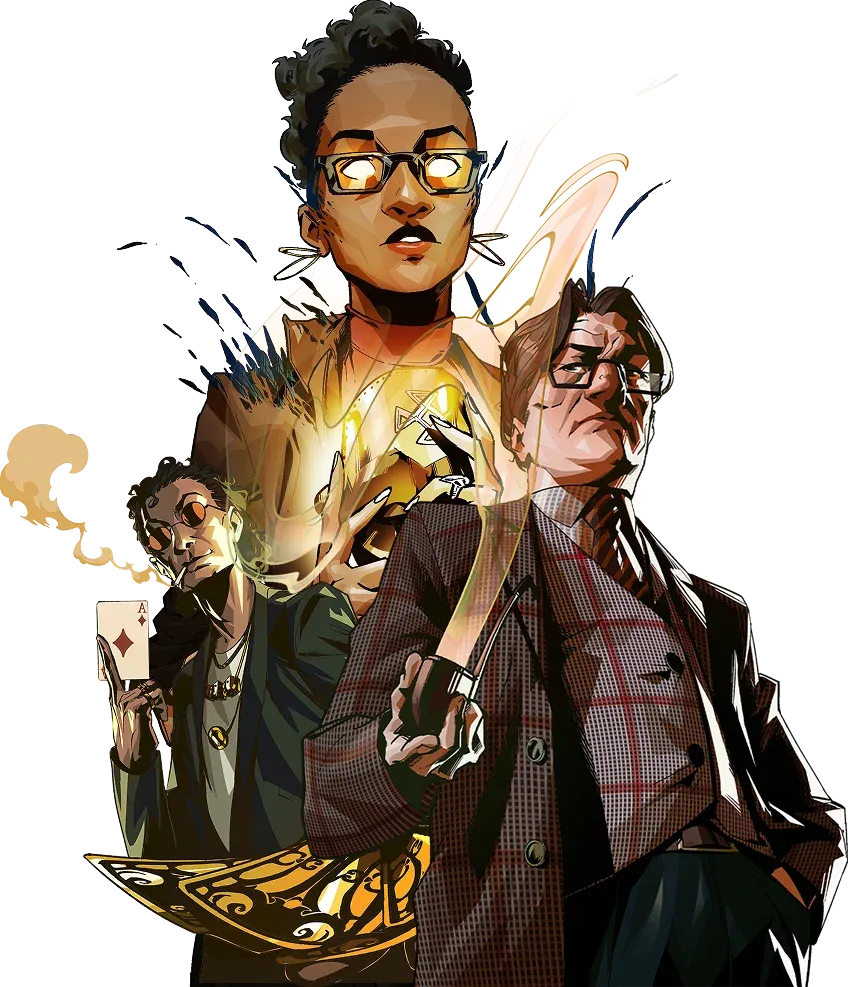
One of our fans once said that they could know it's a son of Oak game just by looking at the art style, which I guess is a sign of strong visual branding. All of our games have the illustrated comic book style, which is really worked for us. It's a huge part of our success, not just because it's so recognizable, but I think also because the art direction really speaks to our fans. Now with upcoming titles we are thinking about how to push this envelope while still remaining true to this visual branding.
Have you collaborated with influencers or actual play streams to promote your games? If so, what worked best?
We have extensively collaborated with influencers, or creators rather, including some actual play streams but also paid promotions and Integrations. It's actually a very tricky thing. It's very easy to spend a lot of money on influencer campaigns, but often times if not played right it's quite hard to get a good return. When you do get a good return, it's amazing what a Creator can do. When Runesmith first shared that City of Mist is his favorite game, we got a huge spike in sales, and he has been a great partner to work with since. But the more expensive such a promotion is, the greater the risk, and I hope more indie ttrpg creators are aware of that and seek advice before syncing a lot of their marketing budget into it. You have to do a lot of trial and error to really know what is going to work in that department. For example the process of evaluating a creators Channel and following and viewership is essential when you try to understand if they can provide a good return on what they are asking for promotion. There are many other elements to this equation. It's much less reliable in some ways than meta ads.
How important is paid advertising (e.g. Facebook, YouTube, Google) versus organic community outreach for your campaigns?
Paid advertising is, I would say, the bread and butter. It's really important for reaching a wider audience beyond your community. In very broad atrokes, I'd say that the community, a solid community, is what gives a campaign its initial and sometimes critical push that is needed to get new people excited, while paying ads are needed for reach in order to tap the full potential of the campaigns target audience. The two complement one another.
How do you maintain momentum during the mid-campaign lull, when most Kickstarter projects tend to lose steam?
To be honest it's quite a difficult challenge and it's becoming harder and harder, and I can't say that we really hacked it. I think there are companies out there that do this part much better, and we're learning from them how to keep the buzz and excitement going with new micro releases and regular streams. In the past, we have enjoyed really strong starts for our campaigns and kind of coasted on that initial wind towards the spike in the finish line, but I'm realizing more and more how critical it is to make the most out of that midsection as well, as hard as it is.
Can you share one marketing decision that didn’t work out the way you hoped—and what you learned from it?
In 2021, we did a Kickstarter for QUEERZ! and on the first day we worked with Hyper RPG who created an incredible, mind-blowing, super sentai (Power Rangers) themed actual play live event. The event was streamed on Twitch and was on the front page of Twitch for 2 hours thanks to the incredible generousity of Hyper RPG lead, Malika Lim. Lots of views. However, it hardly moved the needle for us and we barely saw any sales from it. I think that's when I learned that viewers and buyers are overlapping but not identical groups, and it changed my perspective on actual play. Today I see it more as a long-term community builder than that sales-driving marketing tool.
The City of Mist community is known for its creativity and passion. What have you done to nurture and retain that community over the years?
Yes, I love our creative and passionate community! They really are awesome, and they take our products and make incredible things out of them. I think the main thing we do in terms of the community is just talk to them a lot. We're on the Discord, we ask questions, we have a feedback forum where we ask for specific input from the community. We've brought writers on to the team from the community as well as other types of creators, such as video content creators. The other thing we do is try to put the tools in their hands, especially in our community content program on DriveThruRPG, The Cauldron of Mist (formerly known as the garage). We provide the templates that we use in creating official content so that the community can craft their own unique creations within the same visual design.
Do you use Discord, Reddit, or other platforms to engage with your players and backers beyond Kickstarter? What has been most effective?
Starting a Discord server was the best decision. It's kind of a no-brainer these days, I think it's something that's obvious to everyone. We're hoping to cross 10,000 members this year which is incredible. It's really a home for everyone who likes our games and try to make sure it offers something for every different type of player, whether it's rooms for different games, player finder, rooms for Cauldron creators to share their works and for vtt Crafters, and so on. It's really the beating heart of the community on a day-to-day basis
How do you handle feedback from the community—especially when it challenges your vision for a game or product?
We rely on feedback a lot. As I said we have a dedicated section on the Discord server that is just for us to ask for input and for the community to provide it as a wish. Mostly, we will get extremely valuable and helpful input, and especially with Legend in the Mist, it allowed us to fine-tune the game at a very early stage and very quickly. The community was so deeply involved in the making of that game.One place where the community give us a big whopping NOPE was when we tried to make Legend in the Mist a landscape book. In retrospect it was insane, but at the time it seemed like a really beautiful and artsy way to go. While some of the early adopters supported the idea, as a whole the community said no to it, and I decided to drop the idea. I think at this point it's clear to us that we are not making a game for ourselves alone but for others to play, and if we can't listen to what they have to say, well that doesn't really make sense. I'm a firm believer that sometimes you have to go with your dream despite what others tell you, and sometimes a community will say no only because they can't yet envision what you are envisioning, but sometimes you really just have to listen. And this was one of those situations, and I'm so glad in retrospect that we did listen and kept the portrait / vertical style of the book.
What advice would you give to a first-time TTRPG creator trying to build a loyal following online?
First of all, make a free demo PDF of your game. It's a time-tested practice, but a lot of first-time creators don't think about it as the first step. I literally gave this advice to a new Creator yesterday. Second, try to get an email and return for the PDF. A mailing list of people who are listening to you is invaluable (as opposed to just random emails that you bought somewhere). Third, start a Discord server then get people on there, especially people from your mailing list. And fourth, run a Kickstarter. It's a great way to seed a new community.
What’s your take on the growing role of AI in TTRPG development, whether in writing, layout, art, or NPC generation?
I think that the ttrpg space, as well as the gaming space in general, has rejected AI slop. It's so aggressive then we now have to convince people that the beautiful art in our games that has taken thousands of hours to hand craft is not AI made. And I am so happy that this is the case. I have two problems with AI. The first is ethical, these incredible tools were trained on other people's data without any compensation, and we're already seeing professions like music composing and illustration where it's hurting the very people whose data it was trained on. But in a way my bigger problem with it is that it does not give good results as of yet. It really puts out slop, and it feels devoid of heart. I think a lot of people can sense that and look down on AI products and rightfully so for their lower quality. I just think this AI age will make communities all the more important, because people will flock to what they know is real in a sea of slop.
Have you experimented with AI tools like ChatGPT, Midjourney, or others in your workflow at Son of Oak? If so, how?
As a publishing tool, it's very hard to work with. I've tried it just for the heck of it, because as I said above I'm ethically against it and 100% committed to working with human creatives. But I needed to see what I'm up against, what kind of edge it could give other creators. And its results were so disappointing in comparison to the hype. Have you ever noticed the consistency problem? If an AI tool generates anything for you and you ask it to change specific thing, it will - it must - redesign the whole creation from scratch, and it will ineviatbly get something else wrong while fixing the first issue. It's so incredibly frustrating to work with, for me, so I don't find it very appealing or threatening, at least not yet. I enjoy working with my fellow creatives way way more and the result is far superior.
Do you see AI as a potential threat or an opportunity for indie TTRPG creators?
Right now I don't see it as a threat or opportunity in the sense that it could create better games. As I said, I just think it will create a lot of noise and slop, and that will inevitably make folks look for what is real and human. Of course the gimmicks are going to get more and more flashy. I'm getting a lot of ads for these AI apps that will run a solo ttrpg for you, and I've tried them, but it's so devoid of joy and the consistency problem remains. So it's not that great as of yet to pose a threat, it just highlights what's good by being lame. I think in terms of art it could very soon given an unethical edge to publishers who are willing to lie about using AI, but that's a can of worms I hope most publishers are too smart to open. I think the TTRPG community would heavily penalize dishonesty about AI art and content.
Could AI-enhanced storytelling or dynamic NPC systems ever make their way into a City of Mist digital experience?
Because our game is based on natural language, a digital Mist Engine experience would have a lot to gain from incorporating an LLM, not so much for storytelling, but for tag matching and such. I have to say that in the storytelling department I am still not very impressed with AI. It doesn't have the soul that one wants from a storyteller and the players can sense it. So I don't see that as being a part of it yet.
What’s one thing you wish you knew about crowdfunding before launching your first campaign?
Ha! I wish I knew how much it cost to make a high production value book, and how long it would take me to write it the way I think it should be while managing a company. Those two were my first shocks. We are quite regularly late with projects because of this deadly combo, it takes me a long time to craft a book to the level I think it should be. But I think our fans have been consistently happy with the final outcome, they're very understanding and supportive.
What’s next for Son of Oak and the Mist Engine? Are you exploring new genres, platforms, or collaborations in the near future?
First off, we are really really excited, team and community both, for the arrival of the print version of Legend in the Mist RPG and the Hearts of Ravensdale setting, along the long-awaited accessories and collector editions - this June. It would be a real celebration to see this game in physical form. In the future, we have plans for continuing all three game lines - City of Mist, :Otherscape, Legend in the Mist - and potentially exploring a Sci-Fi setting to complete the genre offering. We are also expanding into licensing which means a lot of third-party products that are using the Mist Engine such as the Balkan-inspired ZAMANORA and the Irish-inspired Beyond the Woods, as well as other upcoming titles. And we continue our quest to develop more accessible, more simplified role-playing games, games that everyone can play – and we have products coming up that push the envelop in that way. Stay tuned!
This interview is presented in partnership with Strigovia.
Strigovia is a dark, Slavic-inspired tabletop RPG where what we call “magic” is not a gift, but a debt owed to the ancient Forest — a power that listens, remembers, and always collects. There are no carefree spells or heroic fireballs here, only whispered rituals, blood-bound bargains, and slow transformations waiting for those who ask for too much.
This is low-fantasy horror focused on survival, painful choices, and stories that linger long after the dice stop rolling.