How Elderbrain Built a Brand Players Want to Return To

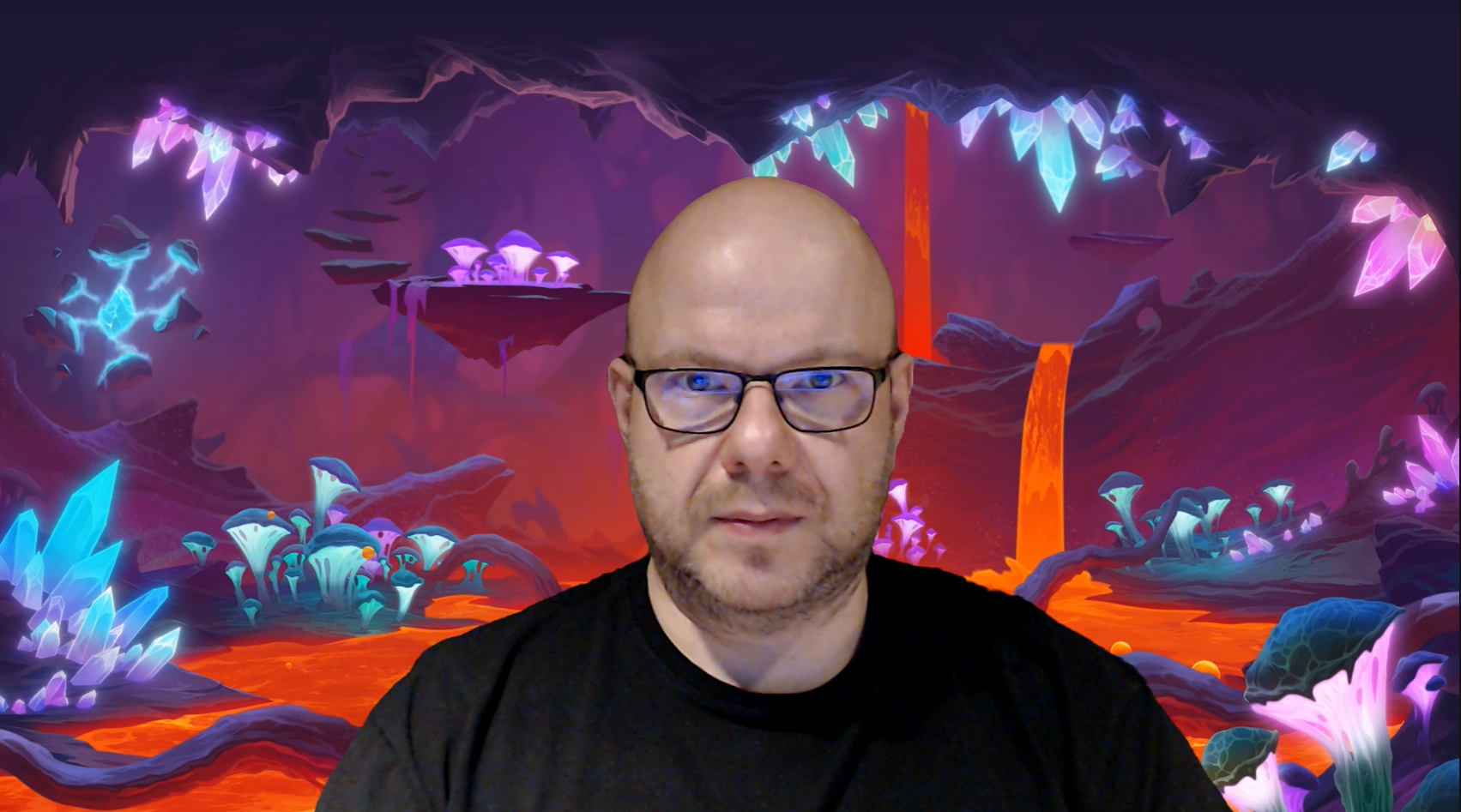
Gábor Dán does not talk about community the way many publishers do. For Elderbrain, the audience is not just a pool of potential customers waiting for the next Kickstarter campaign, but an active creative force helping to shape the worlds, themes, and building blocks of the company’s sprawling adventures. From the earliest surveys shared with Dungeons & Dragons fans to the ongoing “hive mind” conversations on Discord, Elderbrain has treated community not as an afterthought or a marketing layer, but as part of its development pipeline.
That approach helps explain why Elderbrain has grown into something larger than a producer of premium 5e books. It has become a recognizable brand built on deep lore, ambitious long-form storytelling, striking art, and a fanbase that keeps returning for more. In this conversation, Gábor reflects on how Elderbrain balances creative control with community input, what actually drives engagement before and during a crowdfunding campaign, how the economics of large-scale TTRPG publishing work today, and why (despite his fascination with AI’s future potential) he still believes passion and craftsmanship remain the foundation of great roleplaying games.
Onwards!
Elderbrain has built a very distinctive brand identity around its projects. From the beginning, did you think about community-building as creating an audience around a product, or as gathering a group of people who actively help shape the worlds and adventures you publish?
Obviously, as artists—which we all consider ourselves, from writers to illustrators—we wanted to share our work with an audience that genuinely enjoys and responds to it. We wanted to create adventures and have people play them, but at first we weren’t sure what to focus on. So we turned to the internet and to fans of Dungeons & Dragons, asking what they found interesting through a very long survey that we shared as widely as possible.
How much real influence does your community have on the final form of your products? Which kinds of decisions are you happy to hand over to fans, and which ones need to remain firmly in the hands of the creative team?
The surveys we published covered nearly every aspect of a D&D adventure—from villains and allies to dungeons, monsters, encounter types, challenges, their frequency, and more. We explored everything we could think of, and the responses ended up shaping the world we’re building in a fundamental way.
For example, when people voted for themes like ancient civilizations, dark angels, and evil celestials, those choices became the foundation of our setting’s history. We’ve carried these elements into nearly every adventure, forming a consistent backbone across our work.
For individual adventures, we went even deeper. Sometimes we asked for broad ideas, and other times for very specific input—like a hundred random city encounters or a hundred dreams that could influence characters. Of course, everything in between still needs to be carefully designed to ensure a smooth and engaging flow. That’s where we step in, balancing and refining all elements—dungeons, items, subclasses, NPCs, monsters, and more.
Importantly, while our community provides the building blocks, the story itself is always designed by us from scratch. In many ways, we see it as connecting the puzzles our audience places in front of us—shaping their ideas into a cohesive, compelling narrative.
Even so, our work is always heavily influenced by the input of our community, and that influence remains at the core of everything we create.
What worked best for you when it came to building engagement before a Kickstarter campaign launched? Discord, email lists, social media, actual plays, creator collaborations, or something less obvious?
Marketing is, unfortunately, not the most exciting part of the process, but it’s essential for building and growing a community. After all, if people don’t know something exists, they can’t engage with it. Because of this, we rely heavily on marketing efforts and, of course, crowdfunding campaigns to expand our audience.
We primarily interact with our community through Discord and newsletters, where we invite them to participate in our surveys and stay involved in the creative process.
Can you walk me through your community funnel? In other words: where do people discover Elderbrain, where do they stay engaged the longest, and what ultimately converts them into backers?
As mentioned before, marketing is our main tool for bringing attention to our products, which we’ve found to be highly engaging and “sticky.” Once people discover them and spend enough time exploring and engaging with the content, they often get hooked—drawn in by the depth, the beautiful illustrations, and the level of care we put into both game design and storytelling.
We see this reflected in our Discord community, where thousands of players actively share their enthusiasm for our games. They create fan content, write adventure journals, and help each other by answering questions. This kind of interaction is especially valuable because our games can be quite complex and sometimes require a deeper understanding of the overarching story.
What role does Discord play in your overall business model? Do you see it primarily as a communication channel, a research tool, or almost as part of your product development pipeline?
Discord is definitely a core part of our product development pipeline. We rely heavily on community feedback and the ideas shared within what we like to call the “hive mind.” It’s also an important space for our audience to exchange ideas, ask questions, and help one another.
At what point did you realize Elderbrain was no longer just selling books or adventures, but building a brand people wanted to return to? Was there a particular milestone or signal that made that clear?
The turning point was likely the feedback after our first book. People came back to us asking for more, diving into details that even we hadn’t fully developed or considered yet. It was clear they wanted to go deeper.
That response made us realize that, with over 35 years of experience in gaming and RPGs, we had the foundation to expand this universe further—to build something larger and more interconnected. This led us to plan a five-book series, three of which are already written, allowing us to weave a much longer and richer overarching story.
How do you approach the marketing strategy for a Kickstarter campaign? When do preparations begin, and how do you divide your effort between teasing, pre-launch page growth, and the launch itself?
We always run a long pre-launch period during which we release parts of the content and invite our audience—especially members of the HiveMind—to join us in the process. We also put significant effort into marketing these pre-launch phases to attract new participants who may not yet be familiar with our work.
As mentioned before, the marketing strategy itself is fairly straightforward. We focus on channels that consistently perform well, collaborate with influencers, run advertisements, and rely heavily on our existing audience to help spread the word.
For our current campaign, Spawns of the Mindrender, which is in its pre-launch phase on BackerKit, we’ve also introduced a follower-based stretch goal system. As the number of followers grows, new milestones are unlocked, allowing the community to vote on elements of an adventure scenario. Through these polls, they actively help shape and develop the scenario as the campaign gains momentum.
Which advertising and marketing channels have proven most effective for your Kickstarter campaigns? Facebook and Instagram ads, YouTube, newsletters, cross-promotions, influencers, media coverage, or something else?
It’s mainly Facebook and Instagram, YouTube influencers, and our newsletter. We also use cross-promotions, of course, but overall these channels tend to work best for us—and, in many cases, for others in the industry as well.
Do you test different campaign messages and creatives before launch? How do you figure out what resonates most strongly: the setting, the adventure promise, the artwork, VTT support, the size of the book, or something else?
Of course, we run tests. We experiment with different ad copies and creatives—videos, still images, various artwork, color schemes, and messaging. Sometimes the results are surprising, but by now we have a solid understanding that certain visuals and types of content consistently perform better than others.
How do you think about the balance between paid marketing and organic reach? Which creates more long-term value for you: ads that drive immediate backers, or community-building that compounds over time?
The most reliable source is, of course, our existing community—but it needs to be continuously expanded through advertising alongside its organic growth.
A lot of creators say Kickstarter now feels more like a sophisticated performance-marketing machine than a pure crowdfunding platform. Do you agree with that view?
I have to say that platforms like Kickstarter or BackerKit are, for us, primarily just tools to manage the crowdfunding process. Performance marketing typically contributes only a small portion of the funds we raise on these platforms. Most of our backers come either from the platform’s existing user base or from our own established audience.
So once again, building and consistently growing a community that knows and trusts our products is the most important factor.
How important are partnerships and collaborations with other TTRPG creators when it comes to campaign visibility? Does cross-promotion still work as well as it used to, or has its impact declined as the market became more professionalized?
Cross-promotions don’t add much to the performance of our crowdfunding campaigns, even though we still rely on them. For us, these creators are more valuable as peers—people we can share experiences with and discuss industry-specific challenges and insights.
Without revealing anything confidential, can you talk a bit about the cost structure of a large-scale TTRPG campaign? What weighs most heavily in the budget today: writing, editing, art, layout, printing, logistics, advertising?
Everything you listed represents cost-intensive parts of the business, but the most significant expenses are probably illustrations, advertising, and printing.
How has the economics of publishing large 5e campaigns changed over the last few years? Is it harder today to build a healthy margin than it was a few years ago?
Our margins are similar to what they were a few years ago. The key is finding the right partners to create and manufacture our products.
How do you decide how much to invest before a campaign even goes live? Where is the line, for you, between smart risk and simply overspending on pre-launch marketing?
This is the math and science of marketing—you can calculate exactly how much you can spend to acquire a single follower or backer based on user value, conversion rates, and other key factors. In that sense, it’s actually quite straightforward math.
Of course, you don’t want to overspend, but you also have to factor in the long-term value of a user. That part is a bit harder to estimate, but over time—once you have enough data—you can calculate these numbers quite reliably as well.
When you evaluate a Kickstarter campaign, what metrics matter most to you? Total funding, number of backers, average pledge, customer lifetime value, post-campaign sales potential, or something else?
These numbers are all interconnected. The more people who back the project, the higher the total funding, while the average pledge is largely determined by your pricing and the reward tiers you offer. Each factor matters—and more importantly, they all work together.
Elderbrain is known for producing large, premium-feeling campaigns. How do you decide whether the next project should be another flagship release or something smaller, faster, and easier to deliver?
Elderbrain is a passion project—we create what we love. It’s not our primary source of income, but it’s where we invest most of our time and energy. We focus on what excites us: long-form adventures, complex stories, and worlds filled with hundreds—if not thousands—of creative ideas.
At some point, we may shift toward smaller-scale one-shot adventures, but for now, we have a story to finish. There are at least two more books to complete in this campaign arc, and we won’t stop until it’s done—because people are waiting for it.
How do you see AI shaping the future of TTRPG publishing? Do you mainly view it as a tool for internal production, marketing, and community management, or also as something that could directly affect the player experience?
I see AI as a natural development of technology, and I’m not against it at all. That said, we don’t use AI in our work. We create everything ourselves—writing, illustrations, and design—because we believe that, at this point, AI cannot match the level of creativity, detail, and craftsmanship we aim for.
There may come a time when people can’t easily distinguish between AI-generated and human-made content. Still, we believe that genuine passion, care, and love for the game come through in ways that algorithms can’t fully replicate.
Which uses of AI in TTRPGs strike you as the most promising, and which ones concern you the most? I’m thinking about both creative and ethical dimensions: artwork, writing assistance, personalized campaigns, NPC dialogue, VTT tools, and so on.
For me, the most shocking aspect of AI is video generation. It essentially brings together dozens of specialized fields and puts that power into a single tool. The idea of creating videos from our content—or seeing our worlds come to life on screen—is incredibly exciting.
That said, current video generation tools still require a significant amount of skill to use effectively, and that’s not something we have right now. Maybe in the future, as these tools become more intuitive and better at understanding intent without requiring deep technical expertise, we’ll be able to do much more with them.
It would be amazing, for example, to generate entire films from our books—simply by feeding in thousands of pages of text and letting the system bring it to life. That’s something I’d genuinely love to see.
Five years from now, what will the truly successful TTRPG company look like? Will the biggest advantage come from IP, community, product quality, crowdfunding expertise, technology, or from combining all of those well?
I think success is best defined by building a strong IP—one that combines a high-quality product with a large and devoted community. Everything else is simply a tool to achieve that.
Thanks Gábor!
This interview is presented in partnership with Strigovia.
Strigovia is a dark, Slavic-inspired tabletop RPG where what we call “magic” is not a gift, but a debt owed to the ancient Forest — a power that listens, remembers, and always collects. There are no carefree spells or heroic fireballs here, only whispered rituals, blood-bound bargains, and slow transformations waiting for those who ask for too much.
This is low-fantasy horror focused on survival, painful choices, and stories that linger long after the dice stop rolling.