Building a TTRPG for Unlikely Alliances: The Philosophy Behind Human No More
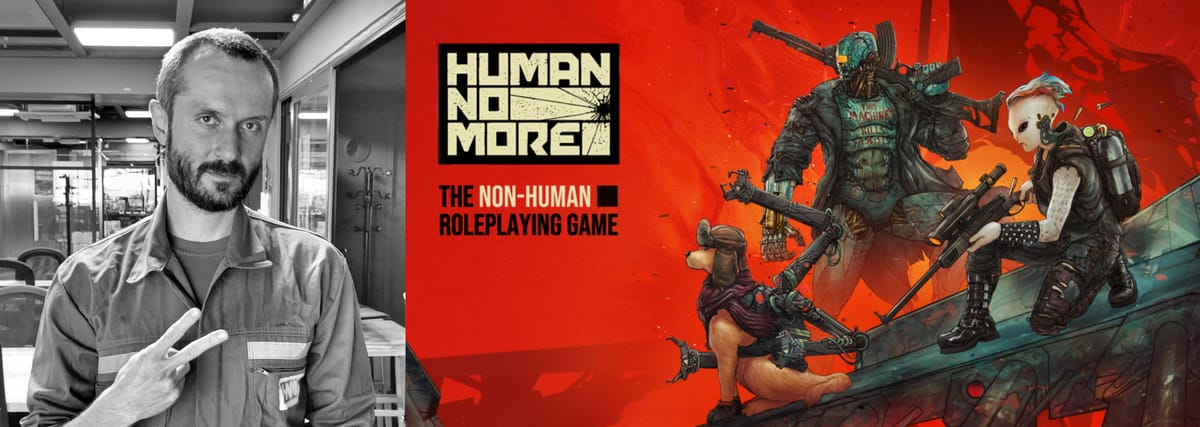
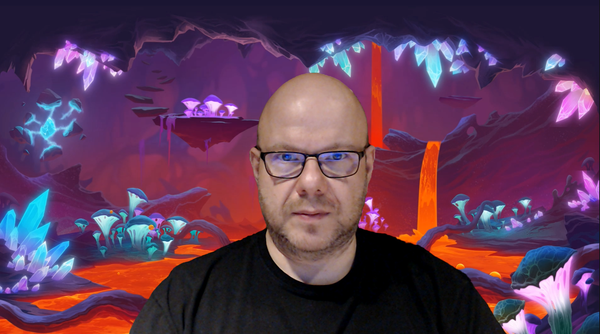
Cultic Games was born out of a filmmaker’s refusal to stay on the sidelines. Before founding the studio, Can Oral was already leading a film collective, used to building teams and telling stories through images. When his lifelong fascination with interactive narratives pushed him toward game development, he applied the same “front lines” mentality: if the story he wanted to see didn’t exist yet, he’d have to create the team and make it real.
The success of Cultic’s first Kickstarter meant that, almost overnight, he found himself not just as a creator, but as the creative director of a fully fledged game studio—learning the rest the hard way, through trial, error, joy, and pain.
That journey led to Stygian: Reign of the Old Ones, a dense, system-heavy CRPG whose mechanics were born at the tabletop and refined digitally through countless iterations. Stygian became an accelerated crash course in RPG systems design for the team, showing them exactly which ideas resonated with players and which fell flat. Those lessons now flow directly into Human No More, their ambitious tabletop project about a non-human revolution against tyrannical humanity—part political allegory, part tactical war story. Drawing on history, anthropology, and politics, Orla sets his game in a time of revolution, where unlikely alliances and extraordinary cooperation feel not only plausible, but necessary.
In Human No More, players don’t just “play the other”—they become the ultimate other. Built on the custom H2O system, rooted in d20 but tuned for ease of play, tactical depth, and strong teamwork, the game asks humans to role-play non-human rebels fighting an oppressive human regime. Around that concept, Cultic Games has constructed not only a striking setting, but also a community-driven Kickstarter campaign that blends paid ads, careful A/B testing, and genuinely personal communication with fans.
In this interview, Can Oral talks about founding Cultic Games, the design philosophy behind Human No More, the choice to flip the usual human-centric perspective, and the hard-won lessons of running a modern TTRPG Kickstarter in an era where attention is a commodity and authenticity still matters.
Onwards!
What sparked the creation of Cultic Games? Do you remember the moment you realized you wanted to build your own studio?
By then, I was already an artist (a film director, to be precise), and I was leading a film collective, so I was pretty accustomed to making collective projects happen and forming teams suited for the tasks and challenges waiting ahead.
When I decided to enter game development, a product of my never-ending passion for creating interactive narratives, I followed the same principles I knew. To me, the only way to make something happen was to take the initiative and join the battle on the front lines.
Following the success of our first Kickstarter project, I was suddenly the creative director of a game development studio. I learned the rest through trial and error, with both joy and pain along the way.
How did your experience developing Stygian: Reign of the Old Ones influence the way you now approach TTRPG design?
It influenced us greatly. Stygian was a massive project that we designed its RPG system from scratch, and it also started with tabletop tests. Through that game, we learned a great deal about how some of our approaches resonated with players while some did not.
The fact that it is a digital game allowed us to conduct an unlimited number of tests on the system, which would not have been possible with a TTRPG, as its testing requires significantly more time and volunteers.
Shortly, it was an accelerated crash course in systems design for RPGs, and we are cultivating everything we have learned so far and more for Human No More.
When did the idea for Human No More first emerge? Was it a worldbuilding concept, a narrative theme, or a mechanical idea that came first?
A few years ago, I was brainstorming on some potential game ideas for a TTRPG design contest. It was just for fun, since I wanted to do something outside my usual ordeals. Then, as you would guess, it turned into (smilingly) something else…
I’ve been a GM for decades, but I've rarely been in a player's shoes. In some of those instances, I’ve seen some player behaviour that would undermine the collective effort and fun for the sake of self-driven ego trips.
For games like Vampire: The Masquerade, it was part of the experience, and, for better or worse, served the theme. For games like D&D, I was finding such behaviour problematic, and knew that it was a pretty common complaint for many player groups within the hobby, so one of my primary goals was to have a very solid foundation, both in terms of the setting and game design, that would keep the player group together and in communication.

I was always interested in history, anthropology, and politics. I believe in drawing inspiration from those fields in fantasy and science fiction to create a more grounded reality within your unreal world. The fiction should feel real to be able to bypass the suspension of disbelief after all.
I couldn’t think of a better period than the times of revolution to set the backdrop for the game, since in those specific periods in history, united against a common antagonist, some of the most unlikely alliances were formed, and people operated in extraordinary harmony and cooperation towards the same goal. Sounds like some solid starting point for a party-based TTRPG, right? :)
Then the “non-human versus human” theme followed, as I had always preferred to portray the other, and wanted our players to see the universe from the perspective of the ultimate other, since science fiction is fertile ground for such allegory.
HNM flips the traditional viewpoint by placing non-human species as the protagonists. What inspired this inversion, and what emotions or reflections did you want players to experience?
When I start working on a concept, I always push myself to approach things from a distinct and provocative perspective. Role-playing games usually give us the chance to be the “other” and explore existences that are different from ours, so I asked myself, what if we allow our players to become the ultimate other?
The dilemma of humans role-playing non-humans in a brutal struggle against humans is rich and meaningful to explore, as it gives your players and GMs a whole new ethical and existential realm to dwell in and come up with their own answers to age-old questions.
How did you structure the worldbuilding for HNM? Did you begin with lore, political themes, faction design, or gameplay mechanics?
I began with an idea: The Non-human Revolution against tyrannical humanity. Everything else followed.
Then we brainstormed the species and worldbuilding, and history began to take shape. We are still in the process of tweaking the history of the Incunabula Hominum as we closely monitor real events worldwide and adjust our estimates, especially regarding AI.
The design process for mechanics and gameplay elements began once we had a cohesive enough universe to build on.
The H2O system is rooted in d20 but promises something distinct. Was it created as a response to limitations you felt in existing systems, or was it built from scratch with a new purpose?
Actually, we started building the game in other systems and changed two of them along the way because fitting them to the experience we had in mind would be more costly than designing our own system.
I had very deliberate expectations for the gameplay: ease of learning, minimal load on the GM while not sacrificing depth, being tactical without endless complexity, etc. So, in the end, it became a necessity for us to design our own system.
You emphasize tactical depth and team-oriented play. What key design decisions ensured those elements genuinely shaped the experience?
The idea of an asymmetrical war of survival against a ruthless, disciplined enemy is always under consideration when designing our systems and challenges. We are also studying how XCOM and similar squad-based tactics games can inspire tabletop RPG battles. We are also shaping the system around teamwork with synergy abilities, reaction mechanics, assist moments etc. Making our players feel like a single, deadly and efficient unit is vital to us.
What steps did you take to build a community around Human No More before launching the Kickstarter?
To be honest, regular stuff: Social media pages, meta ads, Facebook groups, forums and Discord.
Which channels - Discord, X/Twitter, Instagram, email newsletters, dev logs—proved most effective in generating engagement?
Meta Ads and our Instagram page, I suppose.
How did you convert passive followers into active ambassadors who championed the campaign?
We are very sincere and personal with our community. We don’t wear political masks when communicating with them. I personally try to answer all of their questions with the help of our product executive, Görkem and believe me, sometimes we get such profound and provocative questions that we immediately turn into inspiration. I think our effort in communication and belief in building a cohesive universe together with our community resonated with people.
What were the biggest insights or surprises you learned from interacting with the community during the campaign?
That individuals make the day. Yes, the metrics and quantity counts, but when it comes to Kickstarter campaigns, at the end of the day, it is the individuals, with their motivation and support, who make the extra effort and deliver surprising results for your campaign.
Which marketing investments did you prioritize—paid ads, influencers, press outreach, social media campaigns?
The prioritisation was as follows: Paid Ads, Social Media, Press Outreach, Influencers.
Can you share a rough breakdown of your marketing budget for the Kickstarter? How much of the traffic was organic versus paid?
In the current climate, it is impossible to raise awareness for a brand-new setting and system without a marketing budget. The important thing is how many interested customers you are generating with the budget you have at hand. Ten years ago, I raised around 80K Euros without spending a dollar for marketing; today, it is impossible, as the rules of the game have changed drastically. Today, generating more interest with fewer resources is a success, not generating interest in completely organic terms. I am not enjoying this a bit but the megacorporations that rule the internet make money like this, and they also have control over the attention of their users.
Looking back, which advertising channels delivered the best return on investment?
As is often the case with Kickstarter Tabletop projects, Facebook and Instagram.
Did you experiment with any A/B testing of visuals, messaging, or campaign assets before or during the Kickstarter?
Yep, we produced and tested many creatives, images, messages, and their alternatives until we had a group of good-performing ads. Throughout the campaign, we monitored their performance, added new ones, and came up with new incentives to keep them fresh.
What was your process for crafting the campaign page - deciding on visuals, the trailer, stretch goals, and reward tiers?
For us, it is all about continuing the game's theme and staying loyal to the subject matter. So, our trailer is almost a recruitment video from the game’s universe, our visuals are a direct continuation of the game’s visual language and so forth.
Saying that, we also prioritised accessibility and delivering more info as quickly as possible by producing let’s play videos or summarising the whole game and concept in reel-length videos, etc.
What were the biggest challenges in planning the stretch goals and pledge structures?
Not having a precise number of products to manufacture before the campaign. This was a brand-new setting, a brand-new system, which makes estimates pretty difficult. Given that this was also our first tabletop project, it was hard to predict the reception, so we always moved forward with various scenarios to ensure successful fulfilment.
You can also see that, unlike most similar projects, our initial funding goal was “reasonable”. It is apparent that we can not make such a large-scale project happen for a few thousand Dollars. So instead of choosing the smoke and mirrors effect of “Funded in 1 Minute!”, we acted reasonably, gave proper estimations and walked safely.
Do you rely on a repeatable methodology or framework for Kickstarter (timelines, checklists, pre-launch phases), or does each campaign require a unique approach?
We learned a lot from this one. For the next one, we’ll build on what worked, experiment on what didn't, and come up with new approaches that fit the next campaign specifically.
What advice would you give creators preparing to run their first TTRPG Kickstarter campaign?
To any creator, I have one golden advice: Be yourself, do what you love, and do it with no compromise. As it was said, and wisely so, in a distant universe: “Fear is the mind killer.” Unfortunately, Kickstarter and crowdfunding have become the backyard of giant companies, serving as a pre-order platform, but remember, this whole deal is actually for people like you to turn your vision into reality.
After the success of Human No More, where do you envision Cultic Games heading next - expansions, new systems, cross-media projects, or a return to digital games?
We have plans for all those things, but our ultimate short-term goal is to create unforgettable moments for our GMs and players to reenact with their friends as fond memories. Everything else is secondary at the moment. One step at a time ;)
Thank you!
This interview is presented in partnership with Strigovia.
Strigovia is a dark, Slavic-inspired tabletop RPG where what we call “magic” is not a gift, but a debt owed to the ancient Forest — a power that listens, remembers, and always collects. There are no carefree spells or heroic fireballs here, only whispered rituals, blood-bound bargains, and slow transformations waiting for those who ask for too much.
This is low-fantasy horror focused on survival, painful choices, and stories that linger long after the dice stop rolling.