Beyond the Woods: Bringing Irish Storytelling to the RPG Table
This interview is about much more than mechanics or setting design. It’s a conversation about culture, memory, and the act of storytelling itself—and how all three shape the way tabletop role-playing games are created.
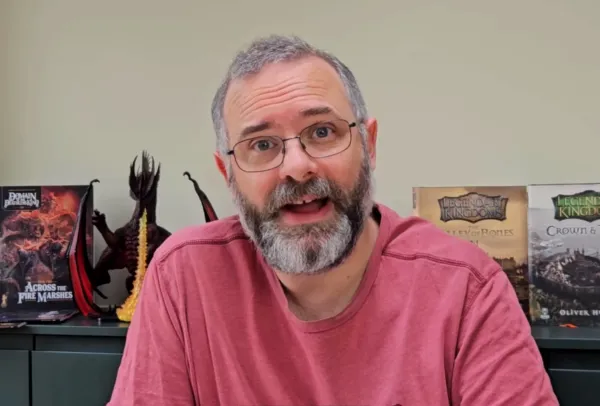
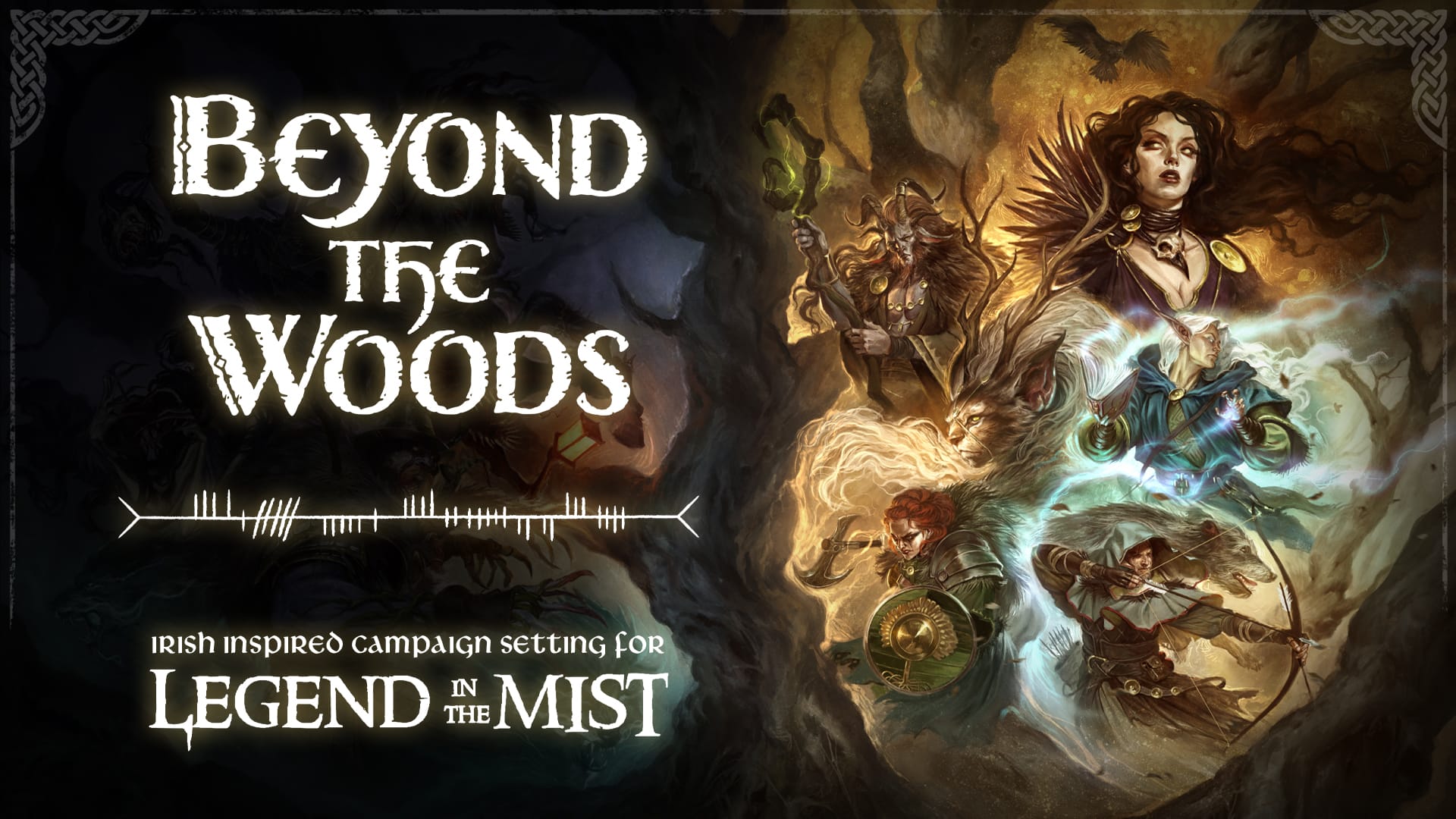
Emmet Byrne, founder of Old Oak Games, has spent over seven years working across both major licensed IPs (Warhammer, The Lord of the Rings, Doctor Who, the Cosmere) and original worlds. In this interview, we return to the foundations of his most personal project, Beyond the Woods (and launching soon: Beyond the Woods for Legend in the Mist RPG) —a setting that aims to bring Irish oral tradition, regional folklore, and a distinct blend of darkness, humour, and tragedy to the RPG table.
We talk about what “Irishness” means as a design practice, how to preserve mystery and contradiction in myth while still writing playable rules, and why a Banshee doesn’t have to be a monster to fight. Emmet reflects on the evolution of his craft, the discipline of killing your darlings, and the sharp contrast between working inside a tightly defined franchise and shaping a world where you can still move the walls.
The conversation also dives into concrete design choices: the Storyteller class inspired by the Irish seanchaí, designing moments of wonder rather than just encounters, playtesting across friends, conventions, and betas, and the often-overlooked business realities of running an indie studio.
If you’re interested in how folklore becomes mechanics, how culture defines tone at the table, and why some worlds are best discovered in fragments—like stories shared by the fireside rather than facts in a textbook—this interview is for you.
Onwards!
Old Oak Games is Irish-owned. What does “Irishness” mean to you in practice when you’re designing a game (tone, themes, humor, worldview)?
For me, Irish people are storytellers. It’s something inherent in our culture, whether its tales passed down from grandparents or just a group of friends catching up, we have a gift for bringing stories to life. There’s also a lot of tragedy and loss in our history, so I think we developed a dark humour to cope with that.
For me, as a designer, I wanted to bring more authentic Irishness to the gaming sphere. A lot of our culture and myths and legends have been co-opted or reduced to stereotypes, but there is rich folklore in Ireland that can stand side with more popular mythology like Norse, Greek, and Roman.
There’s plenty of blood-letting and betrayal in Irish legends, but there is often plenty of humour and absurdity. Reserving that while keeping a consistent tone was a real challenge but felt very important.
You’ve designed TTRPGs for over seven years. What’s the biggest shift you’ve seen in your own craft from your first project to Beyond the Woods?
I think there’s an assuredness that comes with having worked on so many projects across a wide range of games. I’ve worked on mechanically heavy games and on lighter, more narrative focused games, and being able to draw on that experience is hugely beneficial. One of the biggest changes for me personally is to not be precious about something I’ve written or created. Now I always try to pull back and look at what I want players to feel when they play, and if the rules aren’t helping do that then they need to be cut or reworked — kill your darlings!
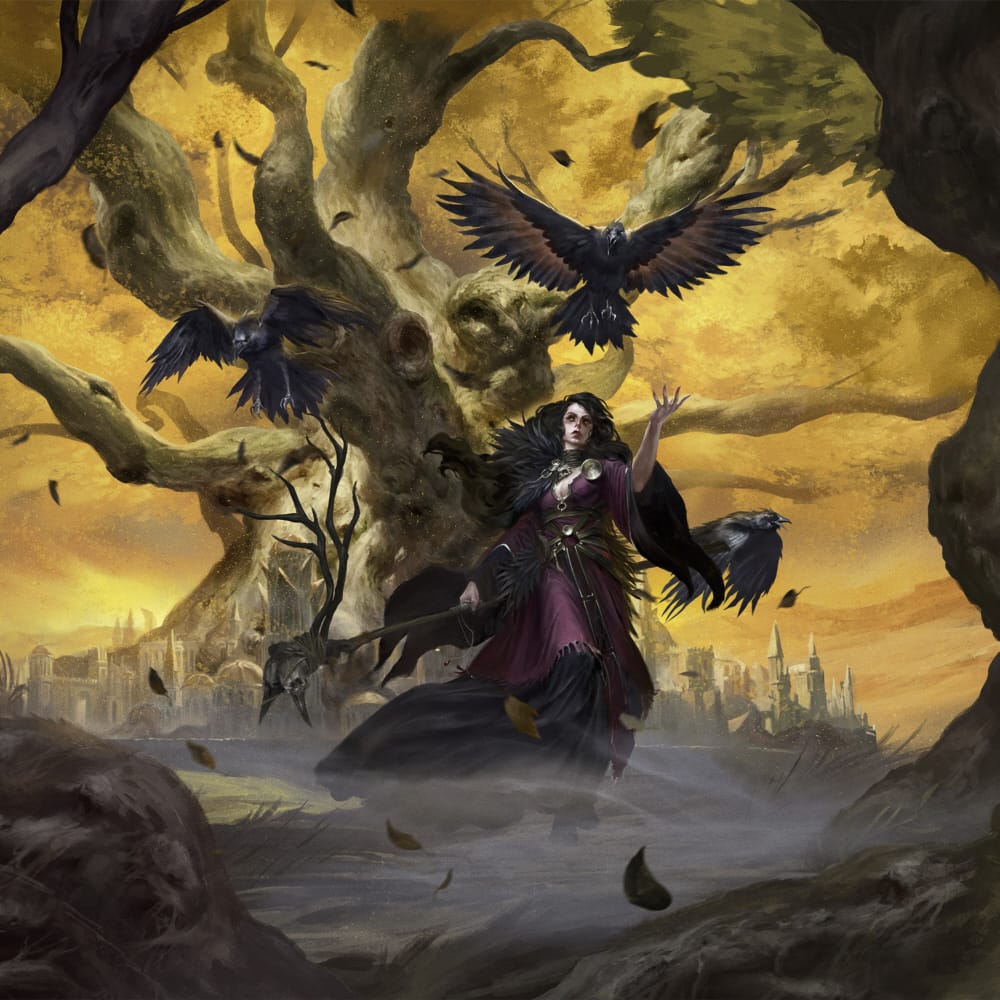
Beyond the Woods is also somewhat of a culmination of the work I’ve done using the 5th edition rules over the last few years. It’s a bit of a swan song to 5e for me as a designer, and marks the end of my time with D&D. I’ve always loved creating new systems, and that’s what I want to do from now on.
When you started Beyond the Woods, what was the “one sentence” vision you wanted players to feel at the table?
The marketing copy is “an Irish inspired dark fantasy world to explore” but much of what I wanted is right there. It had to be Irish, and it had to be about exploration and discovery. I wanted players to feel like they were exploring this unknown land and, given so few people know about Irish folklore, that intrinsically adds to the unknown nature.
Irish folklore is vast and often regional. How did you choose which myths, creatures, and motifs to prioritize and which to leave out?
A lot of it came down to how things fit as I was putting the puzzle of the world together. It was a balance between the “greatest hits” of Irish mythology and the lesser known folklore. For example, a lot of people may have heard of Cú Chulainn, as he’s popped up in a few things, but not many people know about the superstitions surrounding hawthorn trees in Ireland.
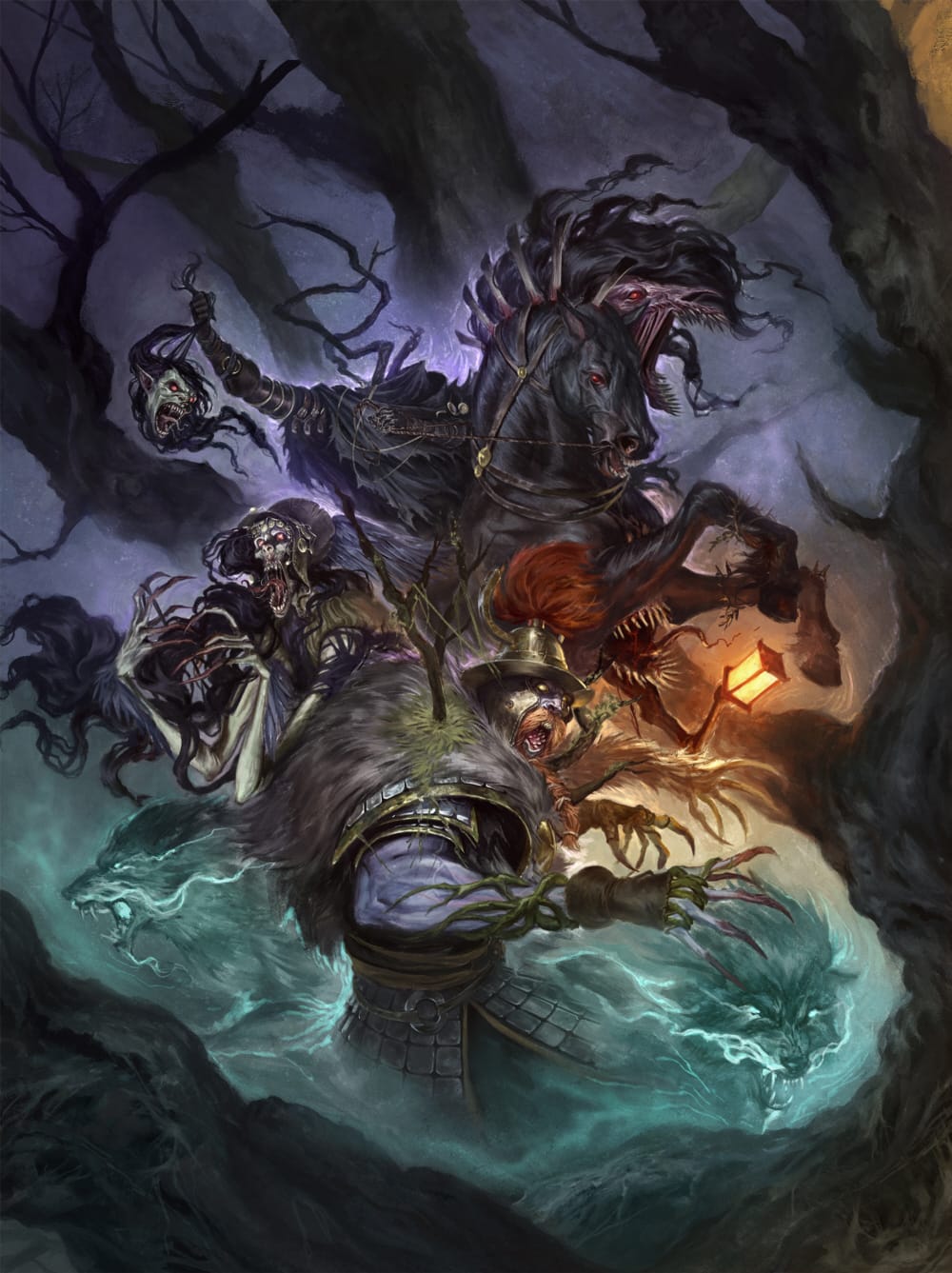
I also wanted to show people that a lot of things they may have already encountered are inspired by Irish myth — and may already appear as monsters in RPGs they’ve played. Things like the Bean Sí (Banshee) or the Dúlachán (the headless horseman), and even characters or gods found in D&D or Warhammer — like Ogma or Manannán mac Lír.
What’s your approach to translating oral storytelling traditions into playable mechanics without losing the “fireside” feeling?
I think the biggest thing is keeping the mystery as much as possible, and trying not to be definitive about things. A lot of Irish folklore changes depending on who you speak to and there are a lot of contradictions in our mythology because so much of it was lost. Trying to maintain that mechanically is difficult because you can’t have wishy-washy rules! The fireside feel comes down to your experiences in the world, encountering the unknown, finding things that are inexplicable, and witnessing people’s superstitions through their actions.
How do you balance authenticity with accessibility for players who know nothing about Irish mythology?
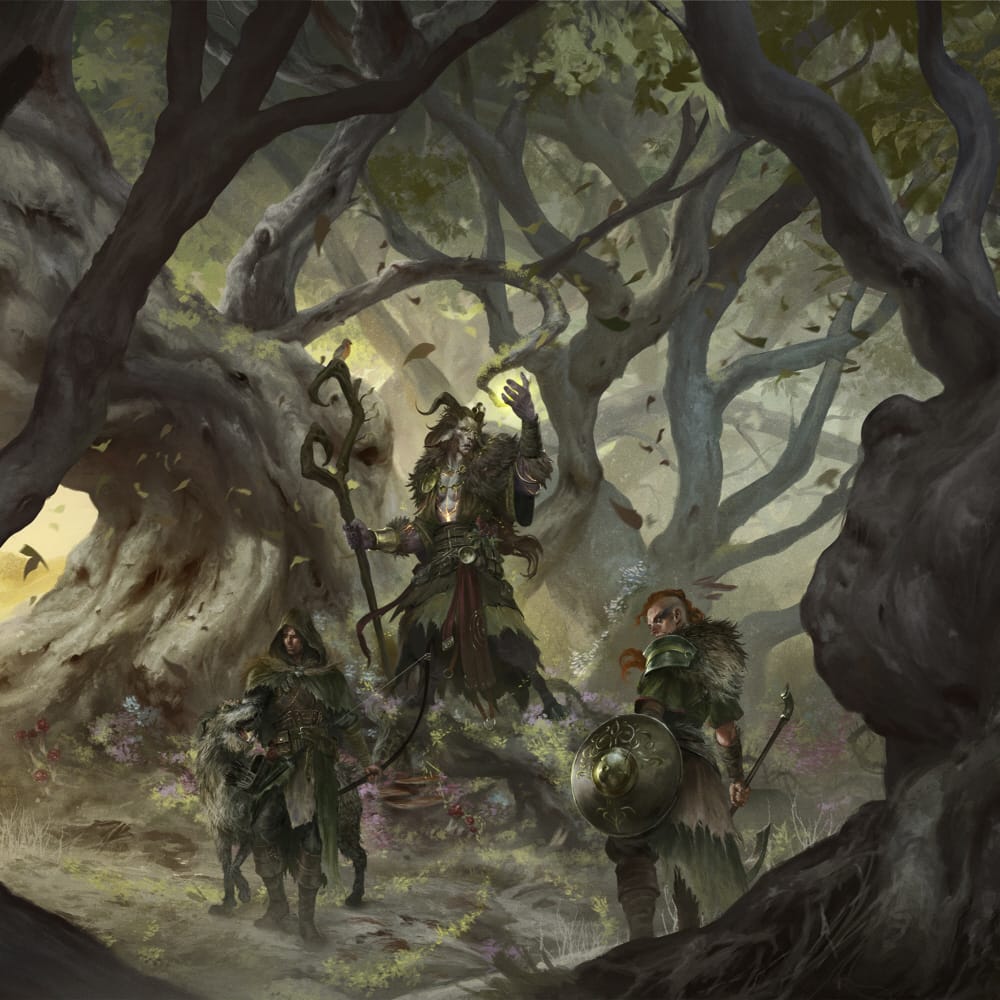
One thing I always say is that Beyond the Woods is inspired by Irish folklore and mythology — its not “fantasy Ireland” and its not trying to present the “true” version of these legends. For players who may be encountering it for the first time, I’ve always liked the approach you see in games like Dark Souls and Elden Ring: you encounter snippets of lore that allude to a greater tale but you rarely have the whole picture.
On a very practical level, I was sure to include a pronunciation guide! Even that is tricky though, because you have Munster Irish, Connacht Irish, and Ulster Irish, and they can sound wildly different. The book also includes links to a few useful websites that can help folks with pronunciation or finding new words.
What’s one Irish myth that’s widely misunderstood in pop culture and how does Beyond the Woods try to correct that?
I’m not sure if misunderstood is the right word, but as I mentioned earlier there are plenty of things in pop culture that people don’t realise may have originated from Ireland, like the headless horseman (the Dúlachán). Likewise Halloween, or Samhain, stems from an Irish festival. The most egregious representation of this was probably the character of “Sam Hain” in Supernatural (and I say that as a big Supernatural fan).
One myth I think probably has been misrepresented, or at least not given due consideration, is the Banshee (Bean Sí). In D&D and a lot of videogames they are mindless monsters (they’re listed as Chaotic Evil in D&D), but they have more in common with global myths of the woman in white, or weeping woman. In Beyond the Woods they are omens of death but not necessarily the cause — unless you steal their comb or do them harm.
There’s also the leprechaun, but I purposely chose not to include that here — that’s for a future book maybe!
Beyond the Woods aims to share Ireland’s storytelling with a global audience. What cultural nuances were hardest to communicate across borders?
I think a lot of it comes down to language. Not just the Irish language, but how Irish people speak English. There is a certain lilt and tone in how we speak, and we have a lot of quirks. Its a balance to try to include some of these in the text but also make it accessible!
What sources did you rely on most (academic texts, collections, living tradition, museum archives), and how did you vet them?
My first port of call, and one I always recommend to people who ask, was the two Irish Myths and Legends collections by Lady Augusta Gregory, Gods and Fighting Men and Cú Chulain and the Red Branch of Ulster. These offer a great foundation in Irish folklore and Gregory did a huge amount of work collecting them prior to publication. Irish Fairy Tales and Folklore by W.B. Yeats is also another great one. Yeats and Gregory are so well-known and respected that they didn’t really need vetting — they speak for themselves.
For lesser known sources I picked up a few books that either collect a variety of weirdness from around Ireland or are small local publications. Many of these are first hand accounts of stories people grew up with. There is contradiction throughout, which is something I love. For these types of tales I didn’t really vet them — that’s part of the charm. They are stories from real Irish people that they believed and were handed down from their parents and grandparents. They’re exactly what I want.
How do you handle sensitive or contested elements of folklore? Where different communities may tell different versions?
As I think you can tell, contradiction is almost inherent in Irish folklore. There has been plenty of spirited debate and discussion on our Discord on certain topics, which is always fun. However, one change I did make was to the name for the gods in the setting. Most people may have heard of the Tuatha Dé Dannan, which supposedly means the “folk of the goddess Danu”. However, most academics believe that there is actually no reference to Danu in Irish mythology — she was added later. Once I learned this I changed every reference in the book from Tuatha Dé Dannan to the original form Tuatha Dé, meaning “folk of the gods”.
You’ve worked on major IPs like The Lord of the Rings, Doctor Who, and Warhammer. What design habits did you pick up from licensed work that helped you on an original world?
Working on someone else's IP can be restrictive, but it also has the benefit of having a clear identity. You can tell pretty quickly what does and doesn’t fit in the world — The Doctor shouldn’t be running around with an assault rifle for example. With your own world, it can almost be harder because you can do anything. Early on with Beyond the Woods I wanted to make sure the world had a clear identity, and that had to flow through the mechanics and the changes I made to the 5e system. The biggest thing was having a clear vision and knowing what I wanted players to experience, and that’s been the guiding light throughout development.
Conversely, what can you do with an original setting (like Beyond the Woods) that you can’t do when working inside a big franchise?
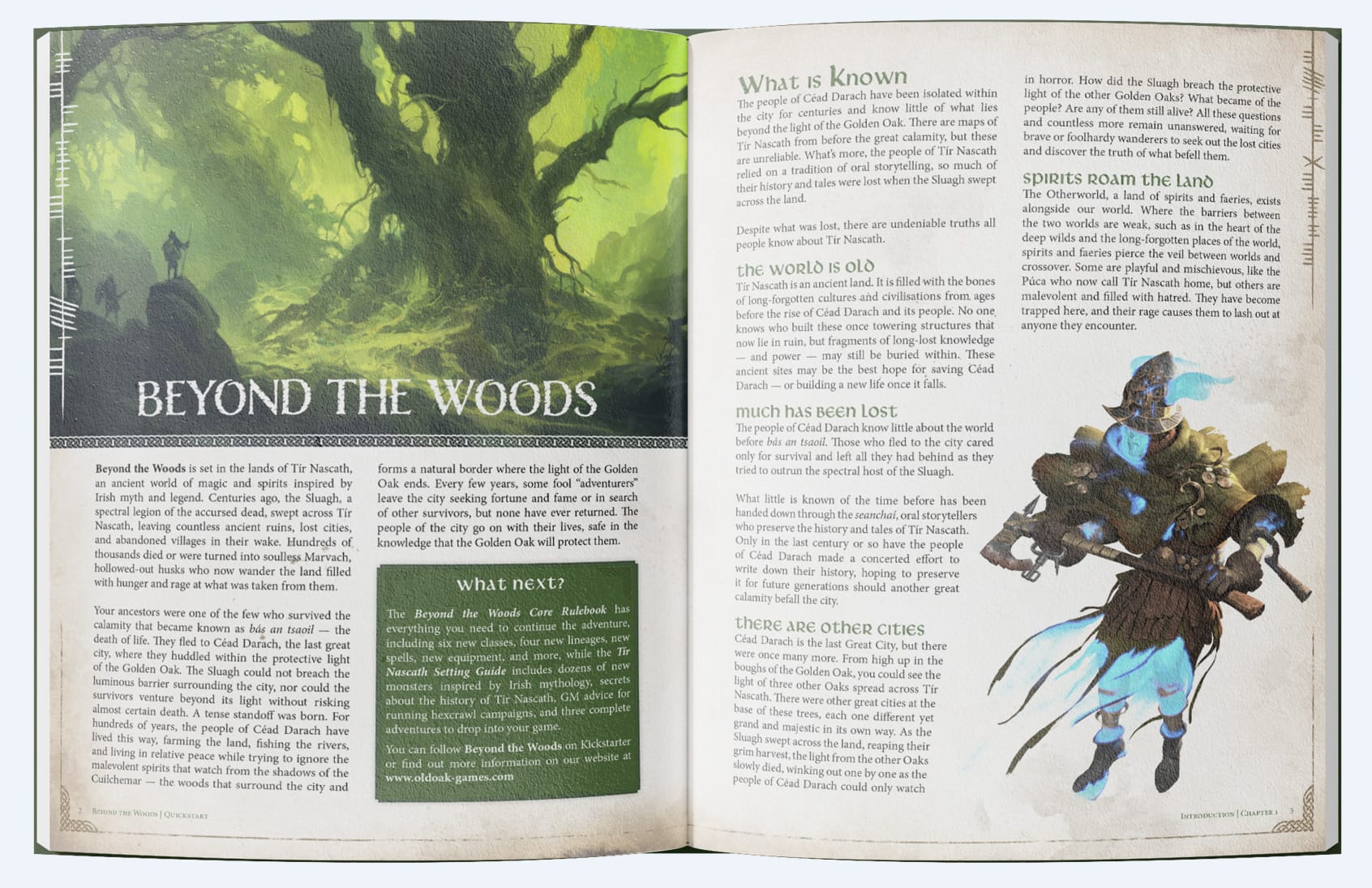
The biggest thing for me is flexibility. If something comes up during development that seems cool and will fit the world, I can change the world around it — as long as it doesn’t break! One good example of this is in my initial vision for Céad Darach, the last surviving city where the players start. At first I pictured it as one big city where everyone was bunched together behind these walls. However, Gareth Hanrahan (who is an amazing writer) wrote two adventures that took place in villages just outside the city — they were close enough to be protected by the light of the oak, but far enough away to be their own communities. I really loved this idea and it made the setting much more interesting, so I made changes to make this fit.
When you design for an established IP, what’s your method for capturing its “voice” quickly and consistently?
I always try to look for what people love about the IP. What drew them to it, what are the themes and tones, what characters do they love and hate, is it more casual or very formal, that sort of thing. I’ll often do a first draft just focusing on getting everything down, and then go back and self-edit to get the right tone.
What did working across Warhammer 40k, Fantasy, and Age of Sigmar teach you about writing for different tones within the same brand ecosystem?
Each flavour of Warhammer has their own feel: 40k is quite serious and grimdark, Age of Sigmar is more epic and hopeful, and Fantasy is very British and has a lot of dark humour (or it did, I don’t think that’s true in the Old World these days!). Once you have that tone right, the biggest thing is respecting the IP. People love these worlds for a reason, you need to respect that and lean into it. You shouldn’t be trying to “fix” it or shoehorn in your own head-cannon. You’re playing with someone else’s toys — don’t break them!
You’ve contributed to Brandon Sanderson’s Cosmere RPG. What was the most interesting design constraint or “rule of the universe” you had to respect?
I’ve only worked on the Cosmere RPG for a few months and sadly missed the chance to work on Mistborn and Stormlight, so I can’t speak too much to this. However, one thing about Brandon Sanderson’s worlds is that there are rules to how things work, and almost everything is tied together — especially in the last few books as he has expanded the Cosmere and we get to see so many connections. I’m very conscious of making sure things I design makes sense in the greater Cosmere. Another thing I’m very aware of is how prolific and meticulous Sanderson is — just because we haven’t seen something “on-screen” doesn’t mean he hasn’t already thought about how it works!
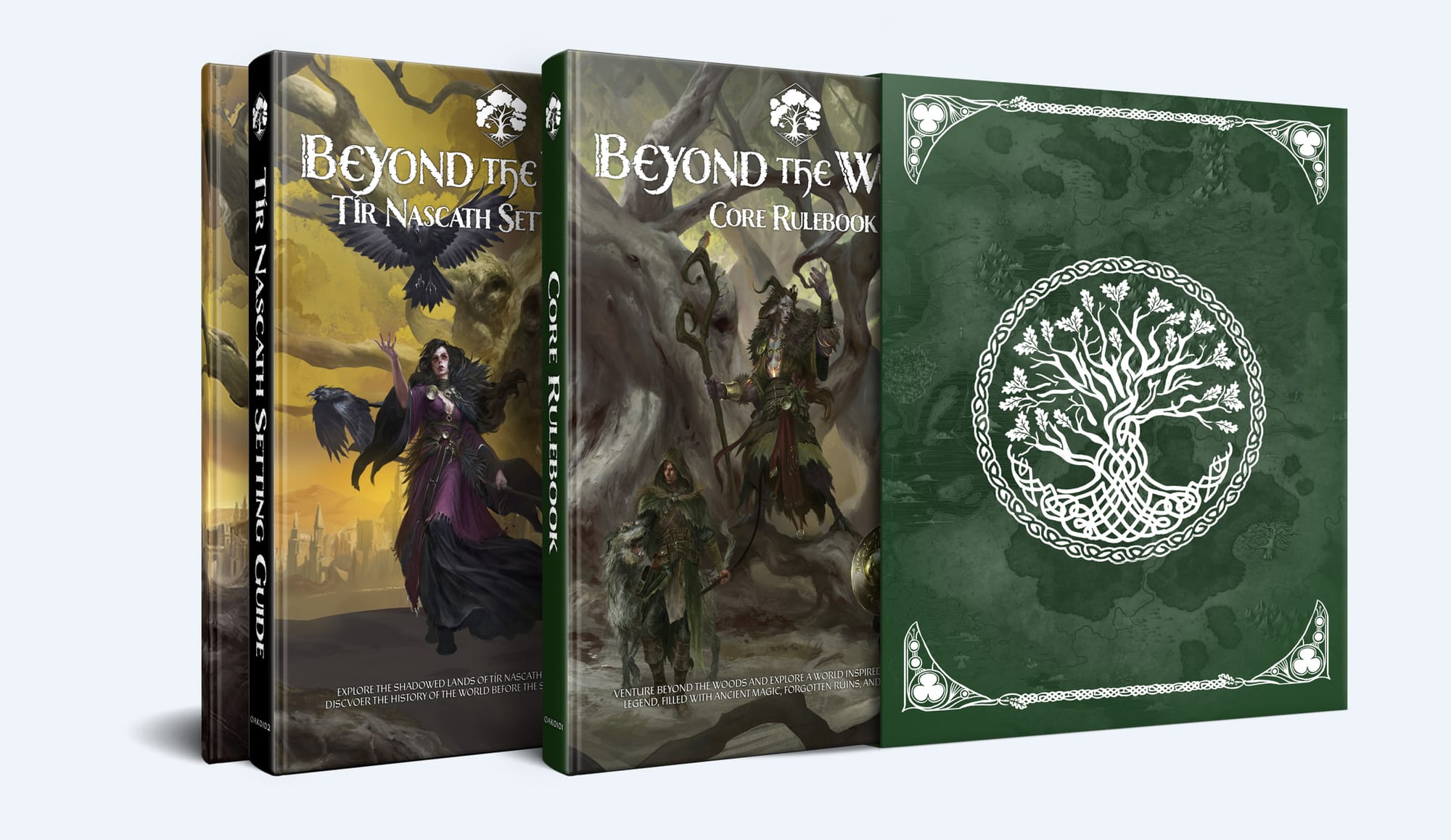
Mechanics question: what is one signature mechanic or system choice in Beyond the Woods that you feel is uniquely tied to Irish myth?
The Storyteller, hands down. They are a brand new class inspired by the Irish Seanchaí. At face value, they are sort of like bards because that’s almost what the seanchaí were, but they are not the D&D bards. They are poets and storytellers who weave tales together and preserve the stories of the past. Mechanically they are heavily inspired by the Chanter from the Pillars of Eternity videogame, and were an absolute blast to design. They’re unlike any D&D class I’ve seen and operate in an unusual way so trying to remove as much friction as possible with players was a big task. It’s been hugely well received by the community though, so it was definitely worth it.
How do you design “wonder” at the table? Moments that feel magical rather than just “another encounter”?
Rather than trying to force those experiences, I like to give players and GMs the tools to create memorable moments. One of my favourite mechanics, and its been in almost every game I’ve designed, is the Last Stand or Heroic Sacrifice. It gives players a chance for that Boromir moment when they fight on when they should be dead. These are the moments I want in my games.
From an experience or story point of view, being able to let players experience something they haven’t seen before can be magical. That’s somewhere I think Beyond the Woods excels, because a lot of people aren’t familiar with Irish mythology so it inherently feels more magical.
What’s your playtesting process like: who do you test with, what feedback do you trust most, and what do you ignore?
I usually test things myself first, just rolling some dice and seeing how it feels. After that I have a group of friends I’ve been playing TTRPGs with for about 20 years, so I’ll run it for them. They are very good at finding things that break the game! They also all have a lot of experience playing, GMing, and just reading TTRPGs so I trust their feedback — and we’ve known each other so long I know they won’t sugarcoat it! After that I’ll take the game to conventions and try it out with people who don’t know anything about it. This is good for seeing the friction points. Then lastly, a beta release or quick start is good for getting some more feedback.
As far as what to trust and what to ignore, if someone offers feedback and I find myself agreeing almost immediately then it’s something I probably knew subconsciously wasn’t working. I rarely ignore feedback but when I do it’s usually because the person giving it is looking for a different experience. For example, when I was working on Age of Sigmar Soulbound we had folks say they felt too powerful — but that was exactly what we wanted. We already had a punishing grimdark game in Warhammer Fantasy, Soulbound was intended to feel superheroic.
As an indie studio, what has been the hardest business lesson so far: production, marketing, community, funding, or timelines?
This is going to sound stupid, but I think for me it has been realising just how much time the “business” side of running a business takes. I’ve worked at almost every level in tabletop RPGs and I consider myself pretty good at managing my time and sticking to deadlines — but as they say, you don’t know what you don’t know! Working with printers, finding distribution partners, applying for funding, doing courses to upskill, these things all take time and are hugely important, but they impact the creative side and have caused a bit of a delay — not a huge one, but more than I’d like. However, we’re in a good place now and I’m working with a lot of great partners, so hopefully those teething problems are behind us — we’re on to all new problems now!
Looking ahead: what’s next for Old Oak Games? More Ireland-inspired content, other mythologies, collaborations, or something entirely different?
Right now we’re in the final run up to our next Kickstarter campaign, which will bring Beyond the Woods to the Legends in the Mist system. As a huge fan, I’m massively excited to dig into the Mist Engine and start converting over what we’ve already created. The simplicity, use of narrative tags, and focus on storytelling fits Beyond the Woods like a glove.
After that, we’re planning on releasing a brand new game with our own system. It’s a survival horror tabletop RPG inspired by games like Resident Evil, Silent Hill, Alan Wake, and the Last of Us. I’m a massive survival horror fan, particularly Resident Evil, and this is the game I’ve been dying to make for the last few years. We’ll have more news about it in the next few months, and expect to go to crowdfunding later this year.
This interview is presented in partnership with Strigovia.
Strigovia is a dark, Slavic-inspired tabletop RPG where what we call “magic” is not a gift, but a debt owed to the ancient Forest — a power that listens, remembers, and always collects. There are no carefree spells or heroic fireballs here, only whispered rituals, blood-bound bargains, and slow transformations waiting for those who ask for too much.
This is low-fantasy horror focused on survival, painful choices, and stories that linger long after the dice stop rolling.