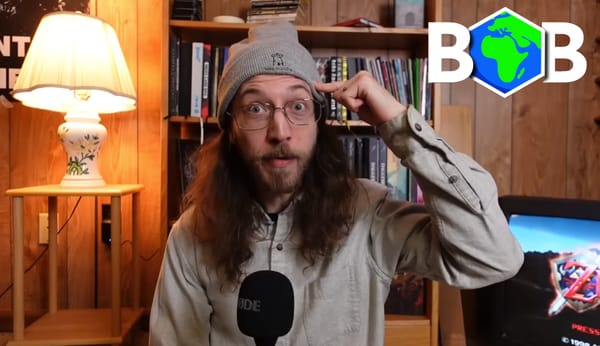
AI, Imagination, and the Limits of Automation in Tabletop Gaming: Kirk Wiebe on the Future of TTRPG Tech


Since picking up Dungeons & Dragons around 2010, Kirk Wiebe—better known as PhD20—has watched tabletop gaming evolve alongside the tools that support it. From early YouTube content in the hobby’s formative digital years to his current work writing thoughtful articles and resources for game masters, he has consistently explored one central question: what happens when code meets imagination?
As a software engineer, Kirk approaches TTRPG technology with both excitement and caution. In this interview for RPG Drop, we dive into what truly feels transformative in today’s tech landscape—and what’s simply incremental polish. Is there a meaningful leap still ahead for virtual tabletops? Could campaign dashboards and data analytics meaningfully sharpen a GM’s craft? And why does “reducing prep time” risk optimizing away something that many game masters genuinely love?
PhD20 makes a compelling case for local-first design, modular architecture, and open standards. In a world of cloud lock-in and subscription fatigue, he argues that we should own our notes, our PDFs, and our workflows. Technology should be flexible, transparent, and interoperable—not a walled garden that reshapes how we engage with the hobby.
On AI, his position is clear and principled. Visual art and the written word sit at the heart of tabletop gaming—and they must remain human. While generative tools may offer leverage for tedious, operational tasks, replacing improvisation or creative authorship crosses a line. Automation can handle the math. It can help organize files. But it should never replace the spark that makes each table unique.
Ultimately, this conversation is about balance. About building tools that empower rather than dictate. About enhancing immersion without turning shared storytelling into software. And about preserving the fundamentally human core of tabletop gaming—even in an era defined by dashboards, plugins, and increasingly intelligent machines.
Because sometimes, the most heroic session of the year might still be the one where the devices go dark, the candles are lit, and the dice roll freely—no API required.
Onwards!
As a software engineer, when you look at the current TTRPG tech landscape, what feels genuinely transformative — and what feels like incremental polish?
We have a lot of excellent technology in our hobby space that simply didn’t exist—or wasn’t very good—a decade ago. That’s genuinely exciting. Still, “transformative” is a strong word. One of the few tools that comes close is D&D Beyond. Before it, character builders were often clunky and unreliable. While D&D Beyond hasn’t been an unqualified good for the hobby, it undeniably reshaped how many people engage with D&D.
Virtual tabletops have matured significantly. What’s the next meaningful leap for VTTs — better UX, deeper automation, interoperability, or something else entirely?
A truly meaningful leap would be data visibility for game masters. Imagine a dashboard showing campaign metrics at a glance: average combat length, damage output, critical hit frequency, most-used abilities, time to first encounter, even player sentiment. With dozens of trackable dimensions, GMs could filter what matters most and refine their craft with real insight rather than intuition alone.
What fundamental problems in tabletop play are still unsolved by technology?
I’m supposed to say scheduling, right? In truth, most practical problems have some technological workaround today. The issue is that no single platform solves them all well. So we circle back to scheduling. And I’m not convinced technology can solve the hardest part of it: people actually showing up.
Many tools aim to “reduce prep time.” Is prep something that should be optimized away — or is it part of the creative joy?
This question goes to the heart of technology’s role in our hobby. Most tools are built to eliminate friction. But what feels like friction to one GM may be the highlight for another. For many, prep is as joyful as play itself. Why optimize away half the experience?
Because tabletop gaming is creative and deeply personal, any tool that supports it must balance efficiency with respect for that creative space.
Where does automation meaningfully enhance immersion, and where does it risk turning the game into software instead of shared imagination?
It depends heavily on the group and the system. Some tables have turned platforms like Foundry into automation powerhouses—but that often requires players to engage with the software in very specific ways mid-session. That won’t suit everyone.
My instinct is to automate the math: modifiers, calculations, mechanical bookkeeping. Those elements enable play but aren’t usually the emotional core of it. Rolling dice, however, is part of the experience. That distinction matters.
Music and visuals also enhance immersion in powerful ways. Automation that supports atmosphere rather than replaces agency likely offers the best balance.
If you were designing the ideal 2026 GM tech stack from scratch, what core layers would it include?
I’d start with local files as the foundation—Markdown, PDFs, and configuration formats like JSON or YAML. On top of that, a desktop/mobile app designed specifically for TTRPG workflows: editing, viewing, organizing.
It should work offline by default, with optional server sync for multiplayer interaction and chat. Lightweight, easy to set up, but extensible for power users through plugins and developer tools.
We already have pieces of this ecosystem. The ideal solution would unify the best of them into a coherent, modular experience.
How important is local-first design in TTRPG tools, especially in an era of cloud dependency and subscription fatigue?
Extremely important. We should own our notes and access them anytime. We buy PDFs and digital resources; they shouldn’t be locked behind perpetual subscriptions. The cloud is useful for backups and online sessions—but it should be an enhancement, not the default foundation.
AI is everywhere in the discourse. In practical terms, where does AI provide real leverage for GMs or designers today?
Art is human. Visual art and writing are core to our hobby and should remain so.
From a technical perspective—focusing specifically on generative AI—its most legitimate leverage lies in handling tedious tasks. Organizing files. Formatting text. Generating structured lists from clear parameters.
I don’t use AI to create plots, NPCs, or locations. Crafting those connections is part of the joy of gamemastery. But for those who value speed and volume, structured outputs like “generate 20 NPCs in this format” can offer practical utility.
What AI use cases feel overhyped or creatively shallow in the TTRPG space?
Most creative replacements. Using AI to generate finished art or written content feels shallow to me. And the idea of AI as a full game master misses what makes the hobby meaningful.
How can AI support improvisation rather than replace it?
Improvisation is inherently human and contextual. Generative AI tends to substitute rather than support that process. I don’t see it meaningfully enhancing improvisation without displacing it.
Do you think AI will primarily serve home tables, indie designers, or established publishers? Why?
Likely all of the above. Large publishers are almost certainly using AI operationally. Indie creators may rely on it for efficiency. Home tables will experiment too.
With the rise of agentic tools, we may see accelerated operational gains across many fields, including TTRPGs. Whether those tools become financially sustainable remains to be seen.
From an engineering perspective, what risks concern you most: platform lock-in, API instability, content ownership, or something else?
For AI specifically, my biggest concerns are ethical and environmental.
For TTRPG technology overall, platform lock-in is the greater risk. We’ve seen how ecosystems like D&D Beyond reshape player behavior. Without interoperability, such platforms risk becoming walled gardens.
If many creators rely on similar AI models, do we risk stylistic convergence in adventures, settings, and mechanics?
At an industry level, I don’t think so. Even shared tools allow for diverse output in skilled hands. But as for using LLMs to design mechanics:
“O, that way madness lies; let me shun that;
No more of that.”
What would responsible AI integration in tabletop tools look like?
Transparency. Clear disclosure of technologies used. Honest communication about environmental impact, training data provenance, and user data handling. Consumers deserve informed choice.
How can modular software architecture improve the longevity and extensibility of TTRPG tools?
Tabletop games themselves are modular—rules, mechanics, systems are swapped in and out constantly. The software supporting them should reflect that same flexibility and composability.
What role should open standards and interoperability play in the future of tabletop technology?
A major one. Shared API standards could unlock real ownership. Imagine purchasing content once and accessing it across platforms via official integrations. That would reduce lock-in and empower players.
Are current TTRPG tools over-engineered for niche needs, or under-engineered for scalability?
It varies. But we’re living in the strongest era of TTRPG tech so far. The growth of 5E, actual plays, and crowdfunding injected momentum and funding into the ecosystem, accelerating innovation dramatically.
How do you think hybrid play (physical + digital) will evolve over the next five years?
Physical play may become even more valued. Technology will continue solving friction points: projectors, TV battle maps, soundscape apps.
Devices will likely become more integrated—players using tablets for sheets, GMs relying on laptops for tools. Still, pen and paper remain irreplaceable.
Perhaps “offline mode” will become something special—a ritual session where devices go dark and candles glow.
If you were launching a new TTRPG-focused tech product tomorrow, what unmet need would you prioritize?
A unified, local-first GM toolkit—plus a video conferencing/VTT hybrid that truly captures the magic of in-person sessions for remote groups.
Finally, how do we ensure that technology enhances — rather than erodes — the fundamentally human, social core of tabletop gaming?
Tools should be transparent, flexible, and affordable. They shouldn’t impose rigid methodologies. Tabletop gaming is open-ended and fueled by human creativity. The technology around it should honor that reality.
This interview is presented in partnership with Strigovia.
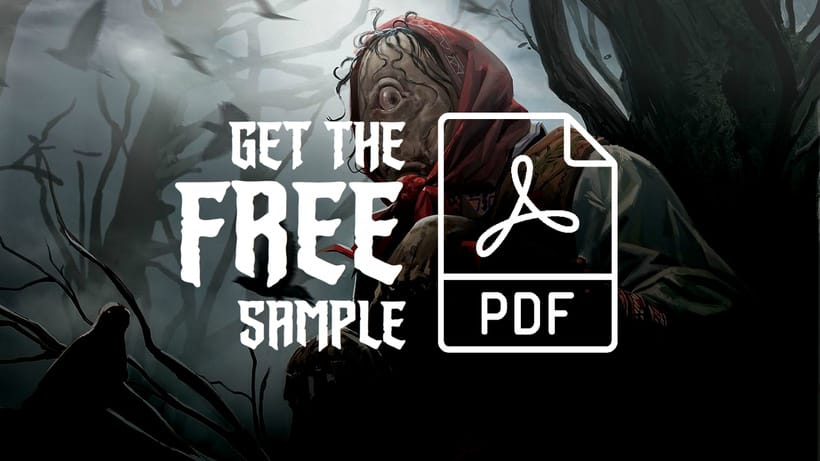
Strigovia is a dark, Slavic-inspired tabletop RPG where what we call “magic” is not a gift, but a debt owed to the ancient Forest — a power that listens, remembers, and always collects. There are no carefree spells or heroic fireballs here, only whispered rituals, blood-bound bargains, and slow transformations waiting for those who ask for too much.
This is low-fantasy horror focused on survival, painful choices, and stories that linger long after the dice stop rolling.